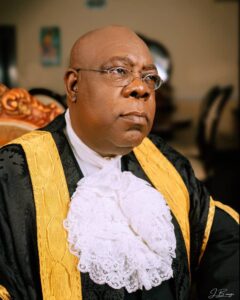
Asiwaju Kunle Kalejaye, SAN,
Eagle 102.5 FM, Ilese-Ijebu
The daily torch media:
The Nigerian political landscape appears to be undergoing a significant transformation, with the street expression “see finish” evolving from everyday slang into a potent strategy of political realpolitik.
In ordinary usage, see finish describes a situation in which familiarity with a person or institution becomes so extensive that respect diminishes, making it easier to expose flaws and challenge previously unquestioned authority.
For decades, Nigeria’s political elite operated within an unwritten understanding that disagreements, betrayals and political rivalries should largely remain behind closed doors. The familiar description of such disputes as a “family affair” reflected an entrenched culture of internal political management.
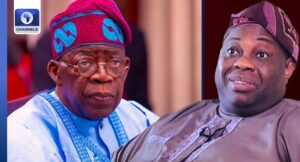
That tradition, however, appears increasingly challenged by the outspoken and confrontational political style of the Minister of the Federal Capital Territory, Nyesom Wike.
Wike has developed a style of political engagement that rejects much of the diplomatic language traditionally associated with elite politics. Rather than preserving political appearances, he frequently confronts his opponents and even political associates publicly, exposing rivalries and competing interests within Nigeria’s political establishment.
This emerging style can be described as Wike realpolitik—a politics built around direct confrontation, political leverage, public disclosure and demonstrable performance.
At its core is the deliberate demystification of political personalities who have traditionally enjoyed enormous influence and loyalty among their supporters.
Wike and the Demystification of Political Giants
One of the most striking features of Wike’s political strategy is his willingness to challenge the perception that major political figures are beyond ordinary political contestation.
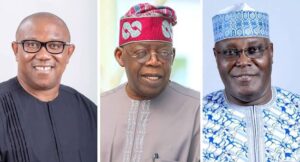
In his recent media engagements, Wike has brought prominent opposition figures, including former Vice President Atiku Abubakar and former Anambra State Governor Peter Obi, into the centre of his political argument.
His suggestion that opposition figures could come after him if President Bola Tinubu loses the 2027 presidential election reframes the political contest as one driven not only by national interests but also by personal political rivalries and competing ambitions.
Through this approach, Wike seeks to strip his opponents of the moral high ground traditionally associated with opposition politics. His argument appears to be that politicians across the divide are participants in the same contest for power and influence.
This strategy has the effect of forcing voters to look beyond political rhetoric and examine the interests and calculations behind competing political alliances.
However, the approach carries its own danger. If every political motive is portrayed as transactional, public confidence in the possibility of principled leadership may gradually erode. Excessive political cynicism can ultimately weaken trust in democratic institutions and opposition politics itself.
Infrastructure as Political Evidence
There is another important dimension to Wike’s political philosophy: the emphasis on visible and measurable achievements.
A politician who encourages citizens to question political claims must also be prepared to face the same scrutiny. Wike appears to have responded to this challenge by placing considerable emphasis on physical infrastructure as evidence of performance.
Nigerians have become increasingly familiar with political promises, campaign manifestos and speeches that do not always translate into tangible results. Against this background, roads, flyovers, schools, hospitals and transportation infrastructure provide visible evidence that voters can assess for themselves.
Wike frequently points to his record as governor of Rivers State, including the construction of flyovers, as well as infrastructure projects undertaken in the Federal Capital Territory since his appointment as FCT Minister.
The argument is straightforward: while voters can question a politician’s intentions, it is considerably more difficult to dispute the existence of a completed road, bridge, school or transportation facility.
Yet, a brick-and-mortar approach to governance has limitations.
Infrastructure alone cannot address issues such as human capital development, institutional integrity, accountability, democratic consolidation and respect for the rule of law.
A modern city may have impressive roads and buildings while still struggling with institutional weaknesses. Sustainable governance therefore requires more than physical development; it also demands strong institutions and policies capable of delivering long-term social and economic progress.
Breaking the APC’s Culture of Internal Silence
Wike’s confrontational approach is not limited to opposition politicians. He has also directed criticism towards political figures within the ruling All Progressives Congress (APC).
Traditionally, disagreements among members of a ruling political party are often managed quietly through negotiations, private meetings and political arbitration.
Wike has repeatedly demonstrated a willingness to take political disagreements into the public arena, including making allegations involving prominent APC governors such as AbdulRahman AbdulRazaq of Kwara State and Hope Uzodinma of Imo State.
Whether all such political claims withstand independent scrutiny is a separate question. What is significant is the political method: Wike appears unwilling to allow disagreements to remain entirely behind closed doors.
By exposing internal tensions, this approach highlights the reality that political parties are often coalitions of individuals and interests rather than completely unified families pursuing identical objectives.
For Wike, public confrontation may also function as a political insurance mechanism. By making his disagreements public, he creates leverage against attempts to marginalise him within the political establishment.
But this strategy carries consequences.
A governing system characterised by permanent confrontation can undermine cohesion, complicate decision-making and make political cooperation more difficult.
The Price of ‘See Finish’ Politics
The greatest strength of see finish politics may also become its greatest weakness.
A politician who succeeds in demystifying others inevitably makes himself vulnerable to the same treatment.
By encouraging Nigerians to scrutinise political personalities beyond their public image, Wike has helped promote a political culture in which voters are increasingly willing to question established narratives and political reputations.
That may be healthy for democracy.
But political exposure also creates enemies.
Wike’s willingness to confront influential figures across party lines has earned him a reputation among supporters as a politician who speaks directly and delivers visible projects. At the same time, it has created a wide network of political adversaries who may be unwilling to extend the traditional protection and accommodation that often characterise elite politics.
As Nigeria approaches the 2027 elections, the sustainability of this political model will face a major test.
The fundamental question is whether visible performance and political toughness can protect a politician against the consequences of a confrontational, scorched-earth approach to power.
Beyond Wike: The Need for a New Political Culture
The changing political calculus should ultimately produce something more valuable than individual political victories.
Nigeria needs a political ecosystem that combines infrastructure and economic development with human capital investment, institutional integrity, democratic advancement and respect for the rule of law.
The lesson from Wike’s political experiment may therefore extend beyond Wike himself.
His “see finish” approach has challenged the traditional mystique surrounding Nigeria’s political elite and demonstrated that political power can increasingly be contested in the full glare of public scrutiny.
Whether that development strengthens or weakens Nigerian democracy will depend on what comes next.
If public exposure produces greater accountability, it could represent an important evolution in Nigeria’s political culture. If it merely replaces private elite negotiations with permanent public warfare, the consequences could be more damaging.
As Nigeria moves towards 2027, Wike’s brand of realpolitik will remain an important case study in how power is acquired, defended and contested in the country.
Indeed, these are interesting times—and there is certainly enough here for students, political analysts and academics to examine.