By Peace Udugba -The daily torch media
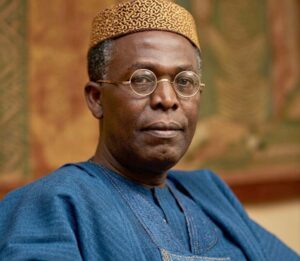
A World Bank Senior Agricultural Economist, Dr. Adetunji Oredipe, has formally declared his intention to contest the 2026 Ogun State governorship election under the platform of the All Progressives Congress (APC), pledging a people-centered administration with a strong focus on rural development.
Oredipe made the declaration during an exclusive interview on Frontline, a current affairs programme on Eagle 102.5 FM, Ilese-Ijebu, where he outlined his vision, experience, and strategies for addressing governance challenges while ensuring sustainable development across the state.
Highlighting his credentials, Oredipe said his experience spans over two decades in agricultural development at both national and international levels. He noted that he once headed the Federal Agricultural Development Programme (FADMA), which has impacted communities across Nigeria.
“I look very good. You are talking about somebody who has handled issues at the national level over 22 years ago. I was the head of the famous FADMA programme that thrives in every community, every village in Nigeria. I have also supported a minister in delivering results in the agricultural sector,” he said.
He further detailed his international engagements, stating that he worked with the governments of Liberia and Sierra Leone for over three years each, contributing to agricultural policy and development.
“I have supported the Liberian government for three and a half years and Sierra Leone for another three and a half years. I sit at tables where agricultural development among nations is discussed. I have seen it all—both in practical terms and behind the scenes—ensuring the right frameworks are in place,” he added.
Oredipe also emphasized his grassroots impact, citing projects such as rural electrification through solar power in communities like Eriti and development initiatives in Ilaro.
“By training, I am a community man. When you speak to me, you are speaking to a community development expert,” he said.
On Zoning and Political Structure
Addressing the zoning debate in Ogun State politics, Oredipe clarified that his views are rooted in administrative convenience rather than ethnic considerations. He explained that the state’s division into zones—Yewa, Egba, Remo, and Ijebu—serves governance efficiency.
He referenced the tenure of former governor Chief Olabisi Onabanjo as an example of visionary leadership from the Ijebu axis, noting the infrastructural strides recorded during that period.
With the incumbent governor, Dapo Abiodun, from the Remo zone, Oredipe—an Ijebu indigene—is positioning himself within the ongoing zoning dynamics, which often influence succession debates in the state.
On Intra-Party Competition
Oredipe acknowledged the stiff competition within the APC, with several prominent aspirants in the race, but maintained that his candidacy is driven by a unique perspective.
“We have an abundance of experience and competition in Ogun State. But at a point in the life of a state, you must look at what is missing. I come to you in the spirit of what is missing,” he said.
He stressed the need for governance to go beyond basic survival for citizens, particularly in rural communities.
“We must be people-centered. It is no longer enough for the poor to just breathe—they must survive and thrive,” he added.
He also referenced ongoing social support efforts in the state, noting that various grants and basic income initiatives have been implemented to support citizens.
Relationship with Incumbent Governor
Oredipe described his relationship with Governor Dapo Abiodun as cordial, noting that the governor has remained neutral in the succession process.
“The current governor is a friend. We belong to the same age grade, the great Bobagunte. To the best of my knowledge, he has remained neutral and is focused on ensuring the best for the state,” he said.
On Local Government Autonomy
Speaking on local government autonomy, Oredipe emphasized the need for strict adherence to constitutional provisions, stressing that each tier of government must operate within its defined responsibilities.
“Local government funds should address local challenges, while state resources should be used for state matters. Respecting this structure is critical to effective governance,” he said.
He further advocated for capacity building at the grassroots level.
“Don’t just give resources—build capacity. Governance should empower people to sustain development themselves,” he added.
Professional Background and Governance
Oredipe underscored the importance of professional background in leadership, arguing that a leader’s expertise often shapes governance priorities and outcomes.
“If you elect an engineer, you will see engineering-driven policies. If you elect a businessman, you will see business-oriented reforms. Now, I am putting something on the table—make a community-driven expert and agriculturalist your governor,” he said.
Reiterating his vision, Oredipe positioned himself as a candidate focused on inclusive growth, rural development, and sustainable economic policies anchored on agriculture.