By Peace Udugba
The Ogun State Judiciary has defended its ongoing digital justice reforms, insisting that the Nigerian Bar Association (NBA) was adequately consulted before the introduction of the new policies that sparked a three-day boycott by the Abeokuta, Sagamu and Ota branches of the association.
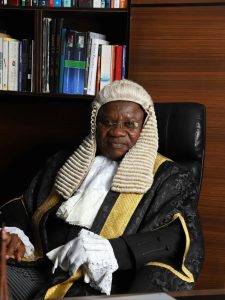
The Chief Registrar of the High Court of Ogun State, Mr. Olakulehin Luqman Oke, made the clarification during an interview on Frontline, a current affairs programme on Eagle 102.5 FM, Ilese-Ijebu, saying the judiciary followed all laid-down procedures before implementing virtual hearings, electronic affidavits and other digital initiatives.
Oke maintained that draft amendments to the High Court Civil Procedure Rules, which included provisions for virtual hearings and the ₦100,000 virtual hearing fee, were circulated to all five NBA branches in Ogun State for comments and observations before they were adopted.
According to him, the judiciary also wrote to the NBA before commencing virtual hearings and introducing the electronic affidavit system. However, he expressed disappointment that the protesting NBA branches announced their boycott through a press statement without formally notifying the judiciary.
“The legal profession is governed by principles, procedures, respect and courtesy. While the NBA has the right to organise a boycott, professional ethics required the association to formally inform the Chief Judge or the Chief Registrar before embarking on such action,” he said.
The Chief Registrar’s remarks followed claims by the Chairman of the NBA Abeokuta Branch, Chief Kayode Aderemi, who had earlier stated that the boycott followed months of consultations and written correspondence with the judiciary over concerns surrounding the new policies.
Responding, Oke insisted that engagement between the Bench and the Bar had been ongoing long before the controversy. He disclosed that the Ogun State Bar and Bench Forum had met three times this year—in January, May and June—with the June meeting extensively discussing the digital reforms.
According to him, both sides agreed during the meeting to continue consultations until a common position was reached, making the subsequent boycott unexpected.
He further revealed that the judiciary organised four sensitisation webinars before the launch of the Ogun Court Management Information System (Ogun CoMis), inviting lawyers from all NBA branches within and outside the state to familiarise themselves with the electronic filing and affidavit platforms.
Addressing concerns over restrictions on electronic affidavits, Oke dismissed claims that lawyers were limited in filing court documents.
He explained that the four-affidavit daily limit applies only to general affidavits, such as declarations of age, change of name and marital status, which are generated from standard templates on the Ogun CoMis platform.
Court-connected affidavits, including verifying affidavits and witness statements on oath filed by legal practitioners, are not subject to any restrictions, he said.
The Chief Registrar noted that the limitation was introduced to curb widespread fraud associated with manually processed general affidavits, many of which were allegedly forged or never recorded in court registries.
He added that the digital platform now guarantees authenticity, proper documentation and verification of affidavits.
On the ₦1,500 electronic affidavit fee, Oke argued that Ogun State’s charges are comparable to those in several states operating similar digital systems, including Rivers, Bayelsa and the Federal Capital Territory.
Although he acknowledged that Ogun’s ₦100,000 virtual hearing fee may be among the highest in the country, he maintained that the state’s virtual court system is efficient and delivers reliable service.
He also defended the increase in oath fees from ₦200 to ₦1,500, saying the previous rate had remained unchanged for over a decade despite inflation and rising operational costs.
According to him, outdated fees encouraged abuse of the system, allowing fake affidavits and forged court stamps to flourish outside official court premises.
Oke urged members of the legal profession to embrace reforms aimed at modernising the administration of justice, stressing that improved service delivery requires sustainable funding.
He disclosed that further engagement between the judiciary and the NBA is expected at the commencement of the new legal year in September after the annual court vacation.