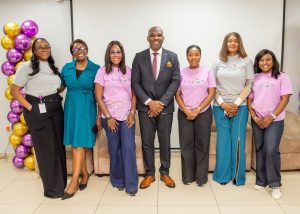
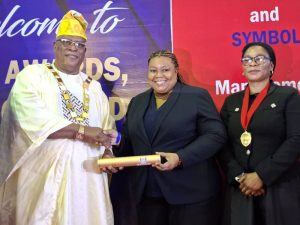
IHS Nigeria employees take a united stand against Gender-Based Violence during the organisation’s GBV Awareness Walk held in Lagos, reaffirming their commitment to promoting a safe and respectful workplace for all.
IHS Nigeria staff march through the streets of Lagos, as they stand against gender-based violence and urge people to Speak, Support and Act. The awareness walk was held as part of activities to commemorate the International Day to End Gender-Based Violence and showcases IHS Nigeria’s commitment to tackling Gender-Based Violence.
By peace Udugba
Lagos, Nigeria — Demonstrating an unwavering commitment to a safe and dignified workplace, IHS Nigeria organized an awareness walk followed by a high-impact seminar as part of activities commemorating the global 16 Days of Activism to End Gender-Based Violence against Women and Girls.
The initiative highlighted the company’s ongoing efforts to sensitize the community, educate employees, strengthen internal safeguards, and reinforce its zero-tolerance policy towards all forms of harassment and abuse.
Following the walk along Adeola Odeku and Idejo Streets on Victoria Island, employees gathered for a seminar at the IHS Nigeria corporate head office. In her opening remarks, Bukola Konkwo, Associate Director of Operations Excellence at IHS Nigeria and a leader in the Women in IHS Network (WIIN), reaffirmed the company’s stance on gender-based violence:
“Violence does not discriminate, and neither should our compassion. At IHS Nigeria, boldness is not just a value on paper—it is a call to action. We are intentional about ensuring every employee feels safe, respected, and empowered.
The seminar featured two leading voices in gender-based violence advocacy: Titiola Vivour-Adeniyi, Executive Secretary of the Lagos State Domestic and Sexual Violence Agency, and Nwanne Okafor, a victimologist and gender-based violence advocate.
Speaking during the seminar, Titilope emphasized the urgency of prevention and education:
Gender-based violence is not a special-class problem. Anybody can be a victim. Our responsibility is to know the signs, protect one another, and intervene early. When we know better, we do better.
She also urged organizations to prioritize consent education, confidential reporting, and thorough background checks—practices IHS Nigeria has already implemented through its Safe Zone Committee, a confidential support system for staff.
Nwanne Okafor spoke on the role of colleagues in recognizing and responding to abuse in the workplace:
Many victims don’t need you to fix their situation; they need your support, your sensitivity, and your discretion. Speak up when necessary. Silence gives violence permission.
Her session included real-life case studies highlighting how abuse negatively impacts workplace productivity, mental health, and overall safety.
The awareness walk, which included both male and female staff from various departments, was a strong show of solidarity with survivors and advocates globally. It served as a public declaration of IHS Nigeria’s unwavering commitment to fostering a workplace culture rooted in *respect, safety, and accountability.
In her closing remarks, Titilope Oguntuga, Director of Sustainability at IHS Nigeria, captured the spirit of the event:
This conversation doesn’t end today. Now that we know better, we must all do better—by advocating, supporting, and actively contributing to a workplace free of violence in any form.
IHS Nigeria continues to strengthen its internal systems, policy frameworks, training programs, safe reporting channels, and ongoing awareness campaigns to ensure every employee feels protected and empowered. The organization reaffirms its zero-tolerance policy toward any form of harassment, abuse, or violence and remains committed to setting people-centered safety standards across the corporate sector.