By Peace Udugba
Presidential aide says regional terrorist networks, insecurity and the “crisis economy” required stronger military operations and international cooperation
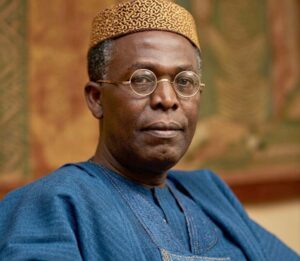
Special Adviser to President Bola Ahmed Tinubu on Media and Policy Communication, Daniel Bwala, has said Nigeria could have been “overrun” by terrorists if not for what he described as the resolute interventions of the Tinubu administration.
Bwala made the claim on Thursday during an interview on Frontline, a current affairs programme on Eagle 102.5 FM, Ilese-Ijebu, Ogun State, where he discussed the country’s security situation and the performance of the Tinubu administration.
According to him, the government inherited a difficult security environment that had been further complicated by the expansion of terrorist networks across the Sahel.
He said the movement of terrorist groups within the region had created a wider security threat for Nigeria, particularly across the country’s northern borders.
“Now, when you have this ISIS at our navel, if not because of the resoluteness of this government, Nigeria would have been overrun.”
Bwala said the activities of terrorist groups, bandits and other criminal elements in parts of the North-West and North-East had made insecurity a complex challenge requiring sustained military, intelligence and policing operations.
He also described the emergence of what he called a “crisis economy”, in which kidnapping and other criminal activities had become sources of financial gain.
According to him, the commercialisation of crime has expanded the security challenge beyond ideological terrorism, with some individuals allegedly resorting to staged kidnappings and other criminal activities for ransom.
“Crisis economy is an economy that is generated from insecurity.”
Bwala said the scale of the challenge had also required the deployment of soldiers for internal security operations, despite the military’s traditional responsibility for external threats.
He argued that Nigeria’s large population and geographical size, coupled with the limited number of security personnel, had placed enormous pressure on the country’s security architecture.
The presidential aide said the Tinubu administration also inherited a situation where a significant number of security personnel were deployed to protect private individuals, further reducing the manpower available for wider security operations.
He recalled the security challenges during the final phase of the previous administration, including attacks, kidnappings, prison breaks and threats by armed groups.
Bwala said the situation had improved under the Tinubu administration, citing what he described as fewer prison breaks, improved security in major cities and the restoration of government presence in previously threatened areas.
“What is the situation today? Minimal or no prison break. Abuja is safe. The large part of the major cities in Nigeria are safe.”
He, however, acknowledged that insecurity remained a serious concern, particularly in communities where terrorists and criminal groups continue to attack and abduct residents.
Bwala also highlighted Nigeria’s growing security cooperation with the United States, saying the partnership had strengthened intelligence sharing, military cooperation and counter-terrorism operations.
According to him, the collaboration has resulted in joint efforts against terrorist targets and provided Nigeria with access to capabilities that would otherwise be costly to deploy independently.
He said the government was also prosecuting terrorism suspects, arguing that the administration’s response to insecurity extended beyond military operations to legal action against suspected terrorists.
On the controversy surrounding killings in Benue and Plateau states and claims of Christian genocide, Bwala rejected allegations that the Federal Government was involved in attacks against Christians.
He said both Christians and Muslims had been victims of violence but maintained that the government was not a participant in the killings.
Bwala further defended the administration’s international engagements on Nigeria’s security situation, saying he had travelled abroad, particularly to the United States, to explain the government’s position and seek stronger international cooperation.
He said the engagements had contributed to the establishment of working groups between Nigeria and the United States focused on security cooperation.
The presidential aide also called on state governors to take greater responsibility for security within their jurisdictions.
He questioned the position of governors who deny being chief security officers of their states while relying heavily on security agencies during elections and other major political activities.
“The truth of the matter is that governors need to do more. A lot of governors are not doing anything.”
Bwala also questioned the effectiveness of state security votes and argued that governments at the sub-national level should demonstrate measurable results from funds allocated to security.
He said the proposed State Police Initiative would help strengthen security at the state level by decentralising policing and allowing security agencies to respond more effectively to local threats.
According to Bwala, the Tinubu administration’s approach to insecurity involves a combination of federal security operations, international partnerships, stronger policing and greater involvement of state governments.
He nevertheless acknowledged that Nigeria’s security challenges were far from over, stressing that sustained efforts would be required from the Federal Government, security agencies, state governments and local authorities.
Bwala urged Nigerians and the media to assess the country’s security situation using operational data and broader trends rather than focusing solely on individual incidents, arguing that the government had recorded progress despite continuing attacks in some parts of the country.