By Peace Udugba — The Daily Torch Media
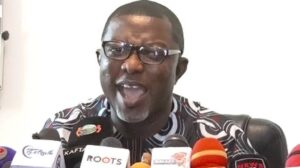
A Labour Party chieftain, Dr. Abayomi Arabambi, has described Nigeria’s former petrol subsidy regime as an “organised fraud,” stating that while its removal was painful for Nigerians, it was necessary to halt what he alleged was the massive misuse of public resources.
Arabambi made the remarks on Thursday, October 8, 2026, during an appearance on Frontline, a current affairs programme on Eagle 102.5 FM in Ilese-Ijebu, Ogun State.
The discussion centered on the fuel subsidy, crude oil management, local refining, the Dangote Refinery, and the broader economic consequences of the Federal Government’s decision to eliminate the petrol subsidy.
Subsidy removal was painful but necessary
Arabambi argued that the subsidy debate should go beyond whether the policy should be retained or abolished. Instead, he insisted that Nigerians must examine how the scheme was operated and address alleged financial irregularities surrounding petroleum importation.
According to him, the subsidy regime created opportunities for certain individuals and companies to impose inflated costs on the government while the country incurred debt to sustain the system.
“Subsidy should stay because it was a scam… some people were just doing fraud with our money.”
He questioned the disparity between the landing cost of imported petrol and the subsidised retail price sold to Nigerians, arguing that the arrangement created room for fraudulent claims against the government.
Arabambi questions crude oil accounting
The Labour Party chieftain also raised concerns over how Nigeria accounts for various products derived from crude oil when exported for refining abroad.
He questioned why refined components such as kerosene, diesel, cooking gas, and bitumen were allegedly unaccounted for when imported petrol returned to the country.
“Is petrol the only component of crude? No.”
Arabambi contended that Nigeria requires a clear, transparent accounting system for all refined derivatives of its crude oil rather than paying for petrol imports without verifying what happened to the remaining products.
‘Some brought dirty water and called it fuel’
Arabambi further alleged that the former subsidy system left Nigeria vulnerable to fraudulent import claims.
“Some of them will even go and bring dirty water into Nigeria and say it is fuel. It is fraud.”
He questioned why Nigeria should continue borrowing money to finance what he characterized as a corrupt scheme.
“We are borrowing money to pay for nothing. We are borrowing money to pay for fraud. So why is it wrong to remove it?”
Dangote Refinery and alleged vested interests
Turning to the emergence of the Dangote Refinery, the Labour Party leader argued that the facility has transformed the dynamics of Nigeria’s petroleum industry.
However, he alleged that certain entrenched interests attempted to force the private refinery into a model similar to the old import-subsidy framework.
Arabambi noted that these actions demonstrate that vested interests remain active within the petroleum sector.
“They are still around… That is where they call organised fraud.”
His comments come amid ongoing national debates regarding domestic refining obligations and crude oil allocations to local refineries.
Credits Buhari and Tinubu on subsidy reform
Arabambi credited former President Muhammadu Buhari with identifying fundamental flaws in the subsidy system and acknowledged President Bola Ahmed Tinubu for taking the step to remove it.
“The hero is the former President, Buhari, because he saw that they are just… milking Nigeria,” he said.
While admitting that the subsidy removal brought immediate economic hardship as market prices surfaced, Arabambi argued that increased local refining capacity and greater market supply would ultimately moderate pump prices over time.
“When we are able to stabilise the economy and we have more refineries… when supply increases, what will happen? The cost will come down.”
More refineries, more competition
Arabambi urged the government to continue encouraging private investment in the petroleum sector, stating that domestic production and competition are essential to lowering fuel costs.
“That is what this President is trying to do. Let us encourage more investors to come,” he said.
He also contrasted the current administration’s approach toward the Dangote Refinery with what he described as the previous administration’s handling of relationships with private refiners.
Concerns over crude oil commitments
Arabambi further alleged that significant portions of Nigeria’s crude oil had been forward-committed years into the future through arrangements tied to petroleum imports and crude management.
He called on the Federal Government to establish an official panel of inquiry into companies lifting Nigerian crude.
“I expected the President to institute a panel of inquiry — every person, every company that is picking our crude abroad, where is the kerosene? Where are the other components?”
He specifically cited diesel, asphalt, and other petroleum derivatives, emphasizing that the value of crude supplied must be reconciled against the volume and variety of refined products returned to Nigeria.
‘Stop relying on palliatives’
Addressing the broader economic impact, Arabambi acknowledged the hardship faced by citizens but urged the country to focus on expanding domestic productive capacity rather than relying on government relief measures.
“When you have an influx of manufacturing companies, that is when employment will be made available. You cannot sit at home and be expecting palliatives.”
He asserted that increased local refining, industrialization, manufacturing, and petroleum availability remain the key drivers for job creation and long-term economic stability.
The 2027 subsidy debate
Arabambi’s remarks coincide with renewed political debates over petrol pricing heading into the 2027 general elections.
Political leaders and parties have offered differing proposals, including targeted subsidies, guaranteed domestic crude allocations, and administrative interventions to reduce retail costs.
Former Labour Party presidential candidate Peter Obi has advocated for targeted subsidies provided systemic corruption is eliminated, while former Vice-President Atiku Abubakar has proposed managed interventions. Peoples Redemption Party presidential candidate Donald Duke has similarly outlined plans to lower petrol prices through direct domestic crude allocation.
These proposals highlight an ongoing debate over whether Nigeria should reintroduce structured subsidies or maintain a market-driven pricing regime sustained by local refining.
For Arabambi, the priority remains tackling systemic corruption and inefficiencies inherited from the previous regime. He reiterated that Nigeria’s long-term stability lies in expanding refining capacity, boosting domestic production, attracting private investment, and ensuring total transparency in crude oil accounting.
Tags: Abayomi Arabambi, Fuel Subsidy, Petrol Subsidy, Subsidy Removal, Labour Party, Dangote Refinery, Fuel Price, Crude Oil, Nigeria Economy, Muhammadu Buhari, Bola Tinubu, Petroleum Industry