By Peace Udugba
The Yoruba socio-political group, Afenifere, has called for a comprehensive and multi-layered investigation into allegations made by former Ekiti State Governor, Ayodele Fayose, suggesting that recent kidnapping incidents in Oyo State may be politically orchestrated to undermine President Bola Ahmed Tinubu’s administration.
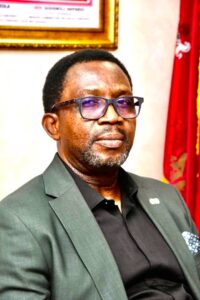
Speaking on Frontline, a current affairs programme on Eagle 102.5 FM, Ilese Ijebu, Afenifere’s National Publicity Secretary, Comrade Jare Ajayi, said the organisation views the matter from a broader structural and security perspective rather than reducing it to personalities or political rivalry.
Ajayi noted that Nigeria is currently operating in a highly charged political environment where insecurity, governance challenges, and electoral considerations often intersect.
“We are in a political era, an election era,” he said, adding that rising political tensions should not be used to dismiss legitimate security concerns or shield institutions from scrutiny.
He stressed that such allegations must be handled with caution, especially within the context of sensitive regional and political dynamics in the country.
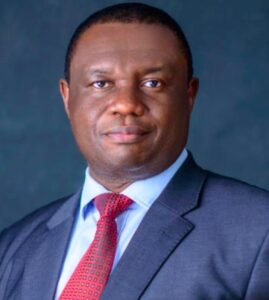
Former Ekiti State Governor, Ayodele Fayose, recently stirred controversy after accusing Oyo State Governor, Seyi Makinde, of orchestrating the kidnapping of schoolchildren and teachers in Oyo State. Fayose made the claim during an appearance on Channels Television’s Politics Today on June 1, 2026, without presenting evidence.
Reacting, Ajayi said Afenifere lacks investigative powers to verify such claims but insisted that security agencies should not ignore them.
“Those who have the authority to investigate matters should not forget to look at it,” he said.
Ajayi further argued that insecurity in Nigeria is multi-dimensional, involving political actors, security personnel, community structures, and, in some cases, foreign interests linked to economic resources.
He claimed that in some instances, kidnapping operations go beyond ransom demands and may involve forced displacement of communities, which could pave the way for illegal mining activities.
“In some places where people have been displaced, illegal mining begins to occur,” he said.
He also referenced reports of arrests involving foreign nationals in connection with illegal mining in parts of northern Nigeria, noting that such cases raise broader security concerns.
Ajayi cautioned against narrowing insecurity narratives to a single individual or political actor, insisting that all possible dimensions must be examined.
During the programme, callers expressed divided opinions, with some dismissing Fayose’s allegations as politically motivated, while others blamed the government for worsening insecurity.
One caller, Abdul Wasiu from Ago Iwoye, said, “No Nigerian will believe him,” citing Fayose’s past political record and describing insecurity as a long-standing national failure.
Another caller argued that insecurity is fundamentally a governance issue rather than a political conspiracy, questioning attempts to politicise the crisis.
In response, Ajayi clarified that Afenifere is not attributing insecurity solely to political factors but insists the political dimension must not be ignored.
“We are not saying the whole thing is political. We are saying the political angle should also not be ignored,” he said.
He also referenced concerns about possible internal compromise within security operations and reiterated Afenifere’s longstanding call for the establishment of state police as a constitutional solution to Nigeria’s security challenges.