By Peace Udugba
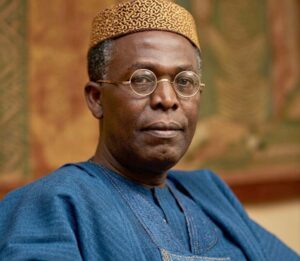
A Research Professor at the Nigerian Institute of International Affairs (NIIA), Professor Olufemi Otubanjo, has thrown his weight behind the proposed creation of state police, describing it as a long-overdue reform capable of strengthening security management and deepening Nigeria’s federal system.
Otubanjo made the remarks during an exclusive interview on Frontline, a current affairs programme on Eagle 102.5 FM, Ilese-Ijebu, Ogun State, following the Senate’s passage of a constitutional amendment bill seeking the establishment of state police services across the country.
The proposed legislation would empower state governments to establish police services and allow governors to appoint Commissioners of Police for their respective states, subject to confirmation by State Houses of Assembly.
According to the professor, state policing is a natural feature of federalism and aligns with the division of responsibilities between different levels of government.
“State police is something that was long overdue. It is a natural part of federalism to have state police and state control of institutions such as the judiciary,” he said.
Otubanjo argued that federal systems typically distribute key functions such as policing, judicial administration and correctional services among national and subnational governments. He maintained that Nigeria’s current arrangement reflects an over-centralisation of power that has weakened the country’s federal structure.
“It is high time Nigeria had state police because it is part of federalism. Every federal system has a division of labour. Just as we have high courts at the state level, we should also have police at the state level. These are state functions,” he stated.
The professor lamented what he described as the abuse of federalism in Nigeria, saying successive administrations had retained control over responsibilities that should ordinarily be shared with state governments.
“We have abused federalism in Nigeria for so long. State police is a natural offshoot of a federal system,” he added.
Using the recent kidnapping incident in Oriire Local Government Area of Oyo State as an example, Otubanjo said governors often lack the authority needed to respond effectively to security challenges within their jurisdictions.
“We have had this over-centralisation of the police to the point that a governor clearly does not have control over the commissioner under him. There is a problem in Oyo State, in Oriire Local Government, yet the governor does not control the security situation. He cannot direct the police, let alone the military, to act,” he said.
He further argued that state police would provide state governments and regional security outfits with greater operational flexibility in tackling crime and insecurity.
According to him, federal police authorities have sometimes restricted the activities of other security organisations on the grounds that they lack the legal powers to act.
“The state police system grants the opportunity for flexible operations and empowers security agencies to respond more effectively within their jurisdictions,” he noted.
While expressing strong support for the reform, Otubanjo acknowledged that implementation could face challenges, including jurisdictional disputes and the potential misuse of police powers by political actors.
“There will be rough edges at the beginning. There will be jurisdictional conflicts. There will be overzealousness on the part of governors who may want to use the police against opponents,” he said.
However, he expressed confidence that legal safeguards, constitutional provisions and institutional reforms would gradually address such concerns.
“All those things will be captured gradually in legal restrictions and constitutional provisions. We have to start. We have to start it,” he said.
Despite fears that governors could abuse state police for political purposes, Otubanjo insisted that such concerns should not prevent the implementation of a reform he believes is necessary.
“State police is an idea whose time has long come. Gradually, we will work out all the rough edges,” he added.
He explained that under a state police system, crimes committed within a state would primarily be handled by state security agencies accountable to the governor, while federal police would focus on interstate crimes and national security matters..
“The state police creates a division of labour in which it is responsible for crimes committed within a state jurisdiction. The head of the police is responsible to the governor, making the governor the chief security officer in both name and practice,” he said.
Drawing comparisons with other countries, Otubanjo noted that decentralised policing structures operate successfully in several federal systems, including the United States, Germany and India.
“The most famous example is the United States, where policing powers are distributed across states, cities and even universities. If university police cannot handle an issue, they escalate it to city or metropolitan police,” he explained.
Beyond security, the professor also spoke on the role of foreign policy in national development, stressing that diplomacy should be used to advance domestic priorities.
“Our foreign policy should utilise resources outside the country to help achieve domestic objectives. President Bola Tinubu has visited several countries to promote investment opportunities in Nigeria’s mining, oil and agricultural sectors. That is how foreign policy should be used,” he said.
He noted that strategic partnerships, bilateral agreements and international cooperation could help attract investment, strengthen security and support economic growth.
Responding to concerns from callers that insecurity had worsened under the Tinubu administration, Otubanjo cautioned against making conclusions without empirical evidence.
“How do you know insecurity is increasing?
Have you done any research? Do you know the level before and the level now? We should be careful not to make assumptions. All I know is that insecurity exists and must be addressed. Whether it has increased or decreased is a different question,” he stated.
On the possibility of politicising state police, the professor emphasised the need for professionalism, competence and integrity in appointments and operations.
“There is no doubt that politics can undermine any project. We are hoping there will be sincerity and commitment to the ethos of policing. Appointments should not be based on family ties or political affiliations. Sincerity must be the essence of the system,” he said.
Otubanjo expressed optimism that public scrutiny, social media oversight and democratic accountability would help curb potential abuses and ensure the success of the proposed state police system
He maintained that the reform remains necessary to address the limitations of Nigeria’s highly centralised policing structure and to strengthen the country’s federal system.