By Peace Udugba
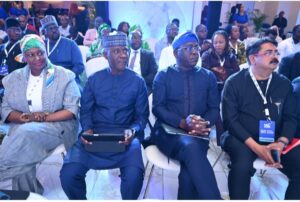
The Nigerian Content Development and Monitoring Board (NCDMB) on Thursday in Port Harcourt organized a workshop for media stakeholders and youth groups, offering in-depth insights into its structure, operations, accomplishments, and strategic goals after 15 impactful years as a leading promoter of local content and regulator in Nigeria’s oil and gas industry.
Held as a flagship event of the NCDMB—running consistently since the Board’s inception in 2010—the workshop also guided participants on procedures for registration for employment or training programmes in industry-relevant skill sets, opportunities for engagement as contractors or vendors, and the Board’s *Community Content Guidelines, aimed at integrating host communities into the oil and gas value chain.
In a presentation titled , NCDMB Mandate and Achievements, the Executive Secretary, Engr. Felix Omatsola Ogbe—represented by Dr. Abdulmalik Halilu, Director of Corporate Services—described the workshop as critically important. He emphasized the vital role of the media, youth groups, and civil society organizations in holding public institutions accountable and demanding value-driven public service.
He explained that the Nigerian Oil and Gas Industry Content Development (NOGICD) Act of 2010, which established the Board, vested it with two core mandates: to develop local capacities and capabilities without compromising standards, and to monitor and enforce compliance with the provisions of the Act.
“Everything we do revolves around our mandate. From our mandate come guidelines that help us measure success—and consequences for non-compliance,” he stated.
He emphasized that the Board operates with a clear framework of predictability. “Once anyone seeking to engage with the Board consults the guidelines and follows them, there’s no need to lobby anybody,” he added, noting that the Board adheres strictly to regulations.
According to Dr. Halilu, these regulations encompass training, indigenous capacity development, registration of oil and gas professionals, technology transfer, research and development, as well as compliance enforcement. Every business within the industry, he noted, operates in alignment with ISO (International Organization for Standardization) standards.
On the Board’s achievements over the past 15 years, he said it has consistently set ambitious targets, driven by a vision to serve as a catalyst for the industrialization of the oil and gas sector and its linkage industries—leveraging the massive annual industry spend to stimulate broader economic growth.
In line with its development targets, the Board has made it a cardinal policy to invest significantly in research and development (R&D) and establish world-class Centres of Excellence in six universities across Nigeria’s six geopolitical zones.
Dr. Halilu emphasized, “There is a direct link between a country’s R&D investment and its GDP. Any nation aspiring to boost local production must have a strong R&D foundation.
He also highlighted the success of the Board’s strategic partnerships, which have led to the commissioning of major industry projects such as the Waltersmith Refinery, NEDO Gas Gathering Plant, and Better Gas Energy Services Limited LPG Terminal and Gas Distribution Infrastructure.
He added that construction is currently ongoing on other key projects including the Azikel Refinery, Transiel Limited LPG Terminal, Eraskon Lubricating Oil Blending Plant, and Ladol Power Plant.
Speaking on the Board’s milestones, Dr. Halilu noted that pressure vessels, galvanized steel structures, and platforms are now increasingly fabricated within Nigeria. He cited the TotalEnergies’ US$3.3 billion Egina FPSO (Floating Production Storage Offloading) vessel—whose topsides were manufactured in Nigeria—as a powerful testament to the country’s growing fabrication capabilities.
Dr. Halilu further highlighted that Nigeria currently boasts over 50 world-class fabrication yards, resulting in an excess capacity now being exported to the Middle East and other African countries. He noted that the growth of the service sector is also significant, with over 100 indigenous companies—many of which have expanded their operations into other oil-producing African nations.
On marine assets, Halilu explained that increasing Nigerian ownership and control of marine vessels and rigs has positioned many citizens for success. “Where you demonstrate ownership and control, you are given first consideration,” he said.
He expressed optimism that Nigeria’s local content success story would inspire broader continental collaboration, especially as Africa holds an estimated 125 billion barrels of crude oil and 800 trillion standard cubic feet of gas, underscoring its vast potential for economic development.
In a separate presentation titled, Impact of the Monitoring and Evaluation Directorate,”* Mr. Silas Ajimijaye, General Manager, Midstream, said the unit is focused on enhancing the oil and gas sector’s contribution to Nigeria’s GDP, which he acknowledged has remained relatively low.
Also speaking, Mr. Tareowei Bufazi, Deputy Manager in the Capacity Building Directorate, outlined their core mandate: “to promote human capital development (HCD) and enhance skills across various areas of the oil and gas industry.” He added that the goal is to build globally competitive competencies while encouraging local ownership of assets and facilities.
Earlier in his opening remarks, the General Manager, Corporate Communications Division (CCD), Dr. Obinna Ezeobi, commended media practitioners, civil society, and youth groups for their invaluable support, particularly in ensuring proper coverage and amplification of the Board’s activities. He assured participants that the Board would continue its capacity-building initiatives and stakeholder engagements.
Dr. Ezeobi urged the media to serve as effective gatekeepers by filtering out misinformation and promoting accurate, development-focused reporting that supports national economic growth.
“Set the right agenda—focus on how we grow local content and how we grow the energy industry,” he said, encouraging participants to ask questions and seek clarity on the Board’s operations to better inform the public.