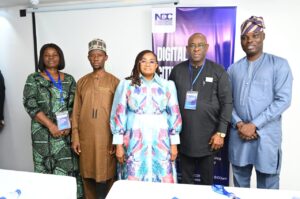
The Nigerian Communications Commission (NCC) has trained more than 100 Persons with Disabilities (PWDs) in Lagos State on digital citizenship, cybersecurity, data protection and assistive technologies.
The two-day training, held on September 9 and 10, 2026, was organised under the theme, “Empowering Persons with Disabilities Through Digital Citizenship for an Inclusive Digital Economy.”
The programme exposed participants to digital foundations, internet and digital communication, cybersecurity, data protection, assistive technologies and responsible participation in the digital space.
Beyond basic digital skills, the training equipped participants with practical knowledge on protecting personal information, identifying online scams, avoiding the disclosure of sensitive data and using accessibility features such as speech-to-text tools.
The programme also addressed social challenges faced by Persons with Disabilities, including discrimination and negative perceptions, while encouraging participants to build confidence and participate actively in society.
Speaking at the programme, the Executive Vice Chairman and Chief Executive Officer of the NCC, Dr Aminu Maida, said the initiative was part of the Commission’s commitment to ensuring that Persons with Disabilities are not excluded from Nigeria’s digital economy.
Maida, who was represented by the Director, Digital Economy Department, Helen Obi, said digital inclusion must go beyond providing internet connectivity.
He said digital citizenship involves the knowledge, skills and responsible behaviours required to participate safely and meaningfully online, protect personal information, recognise scams and misinformation, safeguard digital identity, and understand digital rights and responsibilities.
According to him, technology can help remove barriers to education and employment, support entrepreneurship and remote work, improve access to information and public services, and promote greater independence among Persons with Disabilities through assistive technologies.
Maida said the Commission’s objective was to build a Nigeria where disability would not determine whether an individual could access education and public services, secure employment, establish a business or contribute productively to society.
“You are not merely beneficiaries; you are important participants and contributors to Nigeria’s digital economy. Your talents, ideas, businesses and aspirations have value, and technology can help take them further,” he told the participants.
The Lagos training is part of a broader NCC initiative to provide digital skills training for Persons with Disabilities across the country’s geopolitical zones.
Maida said the programme builds on other NCC interventions aimed at expanding digital access and inclusion, including the Commission’s E-Accessibility Project, which provides ICT tools and assistive technologies to institutions supporting Persons with Disabilities.
He also cited the Commission’s support for research into assistive technologies, including an assistive walking-stick prototype for blind and visually impaired persons, as well as the fourth NCC Hackathon, themed “Technology Without Barriers,” which encouraged innovators to develop accessibility and inclusion-focused solutions.
Maida stressed that connectivity alone would not guarantee meaningful digital inclusion unless Nigerians also had the knowledge and confidence to use technology safely, responsibly and productively.
He said the NCC remained committed to promoting connectivity, digital skills, accessibility, online safety and meaningful participation in the digital economy.
The EVC called for stronger collaboration among government institutions, regulators, technology companies, service providers, development partners, civil society organisations and Organisations of Persons with Disabilities to ensure that accessibility was incorporated into the design and deployment of digital products and services.
He also acknowledged the contributions of the Lagos State Government, National Commission for Persons with Disabilities, Lagos State Office for Disability Affairs and other stakeholders to the programme.
For the more than 100 participants trained in Lagos, the intervention provided practical knowledge to help them protect personal information, identify potential online scams, communicate using assistive technologies and navigate the digital environment with greater confidence and independence.