By Peace Udugba -The daily torch media
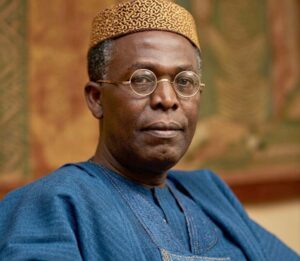
Former Ekiti State Governor, Segun Oni, has called for caution in Nigeria’s national security strategy, warning that rushed reintegration of individuals linked to violent extremism could undermine long-term national stability.
Oni made the remarks on Wednesday during an extended media interview on Frontline, a current affairs programme on Eagle 102.5 FM, Ilese-Ijebu, Ogun State, where he spoke on security, governance, the economy, and democratic reforms.
He stressed that while government efforts to address insecurity and stabilise the economy are ongoing, policies relating to deradicalisation and reintegration must be carefully structured and strictly monitored.
“I want to advise. The government should not be too much in a hurry to assimilate people who are proven terrorists into the system,” he said. “Because assimilating them into the system is a risk.”
Background: Operation Safe Corridor:
The Federal Government established Operation Safe Corridor (OPSC) in 2016 as a non-kinetic approach to addressing insurgency in the North-East. The programme is designed to rehabilitate, de-radicalise, and reintegrate low-risk, repentant insurgents who voluntarily surrender their arms.
Managed by a multi-agency framework involving the Nigerian Military, DSS, and other MDAs, the initiative operates mainly from the Malam Sidi camp in Gombe State, where participants undergo 6 to 12 months of rehabilitation, including psychosocial support, religious reorientation, and vocational training.
Despite its objectives, the programme has remained controversial. Critics argue it raises concerns about justice for victims of insurgency and the possibility of recidivism among former fighters, while supporters describe it as a strategic tool for reducing the insurgent population without prolonged conflict.
Recent Developments:
In April 2026, the Federal Government announced that 744 rehabilitated ex-insurgents and victims of extremism had completed rehabilitation and were set for reintegration into their communities.
A large proportion of the cohort reportedly comes from Borno State.
As part of enhanced security measures, authorities have integrated National Identification Number (NIN) tracking to monitor reintegrated individuals across their local government areas.
“Rehabilitation Must Be Closely Watched” — Oni:
Reacting to the development, Oni warned that rehabilitation without strict oversight could fail, arguing that behavioural patterns linked to violence are difficult to erase.
“Many of them are addicted to what they are doing,” he said. “Because what they are doing yields economic benefit, the addiction becomes strong. If you take them through rehabilitation and release them again, they may return to crime.”
He emphasised the need for strong monitoring systems, warning against broad reintegration policies without safeguards.
“It is not an addiction that is easy to overcome. We must be very, very cautious. I don’t see much prospect in getting so many in and releasing them without close monitoring,” he said.
While not opposing rehabilitation entirely, Oni stressed that such programmes must be aligned with legal and security frameworks.
Call for Legal Alignment and Due Process:
Oni further urged that deradicalisation efforts should not bypass established legal structures such as the prerogative of mercy process.
“We are always creating new channels,” he said. “If there is an existing process, like prerogative of mercy, we should use it instead of creating detours.”
He clarified that he was not calling for suspension of rehabilitation programmes but for better coordination.
“I’m not saying suspended. I’m saying aligned properly. You can still do both,” he said.
Economy, Security, and Agriculture
Oni also linked insecurity to Nigeria’s economic challenges, particularly inflation and declining agricultural productivity.
He noted that insecurity in rural areas continues to weaken food production.
“Farmers are not as productive as they should be because the security index is very poor,” he said.
He added that even rumours of kidnapping affect economic activity and public confidence.
“When we hear of kidnapping or even rumours, everybody becomes jittery, and that alone affects economic activity,” he said.
While acknowledging government efforts, he commended security agencies and urged citizens to support them with credible intelligence.
On Governance and Hardship
Oni acknowledged ongoing economic hardship in the country, noting that reforms take time to yield results.
“The hardship will not go overnight,” he said.
He also stated that palliative measures remain necessary, though they must be properly structured.
“I am not a fan of palliatives, but we have to do it,” he said.
He suggested that institutions such as schools and faith-based organisations could be used as distribution channels for social support.
On Democracy and Political Reform
Turning to democratic governance, Oni warned that Nigeria’s political system is regressing due to weak party structures and excessive proliferation of political parties.
“To be honest, we are regressing. We are on the reverse,” he said.
He argued that many political parties lack ideological depth and only promote opportunism.
“Twenty-one political parties or whatever number only creates opportunism,” he said.
He proposed stricter conditions for party registration, including minimum performance thresholds in national elections.
Conclusion
Oni concluded by warning that without coordinated reforms in security, governance, and democratic practice, Nigeria risks repeating cycles of instability under different political administrations.