By Peace Udugba
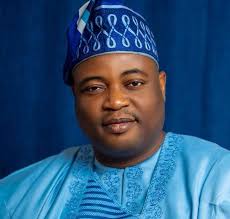
Legal practitioner, rights advocate and public policy analyst, Liborous Oshoma, has said the Federal Government must amend the National Youth Service Corps (NYSC) Act before implementing any major reforms to the scheme, insisting that executive approval alone cannot alter a programme established by law.
Oshoma made the remarks during an exclusive interview on Frontline, a current affairs programme on Eagle 102.5 FM, Ilese-Ijebu, Ogun State, while reacting to the Federal Government’s recently approved reforms for the NYSC.
Following the June 30 meeting of the Federal Executive Council (FEC), President Bola Tinubu approved what has been described as the most extensive reform of the NYSC since its establishment 53 years ago.
The proposed reforms include extending the orientation course from three weeks to six weeks, with the programme divided into three phases focusing on leadership development, career readiness and specialised training. The reforms also introduce 11 specialised service streams aimed at equipping corps members with practical skills aligned with their academic disciplines and career aspirations.
Reacting to the development, Oshoma said although reforms are necessary, they must comply with constitutional and legislative procedures because the NYSC was established by an Act of the National Assembly.
“First and foremost, the NYSC is a creation of law. Certainly, if you want to reform, the reform should also take the position of a law amendment,” he said.
He maintained that while the Federal Government has the authority to initiate reforms, it cannot unilaterally introduce changes that alter provisions already contained in the NYSC Act.
“Certainly the federal government cannot introduce reforms to the NYSC unilaterally without amending the Act,” Oshoma stated.
According to him, only administrative adjustments that do not conflict with the existing law can be implemented without legislative approval.
Using the appointment of the NYSC Director-General as an example, Oshoma noted that where the law prescribes that the office be occupied by a serving military officer, the government cannot appoint a civilian unless the relevant provision is first amended.
He stressed that any meaningful reform must be backed by legislation passed by the National Assembly.
Oshoma also called for extensive stakeholder consultations before any amendment is presented to lawmakers, saying the process should involve universities, serving corps members, prospective corps members and other young Nigerians directly affected by the scheme.
He urged members of the National Assembly to begin constituency-level consultations to gauge public opinion and ensure that the eventual reforms reflect the aspirations of Nigerian youths.
According to him, policies designed for young people should not be formulated without their active participation.
He also criticised the tendency of older political leaders to make decisions on behalf of younger Nigerians without adequately seeking their views.
On public reaction to the proposed reforms, Oshoma attributed widespread scepticism to what he described as a growing trust deficit between citizens and government.
He said many Nigerians now view government initiatives with suspicion, regardless of their potential benefits, adding that such distrust has influenced public perception of the proposed NYSC reforms.
Despite existing challenges, Oshoma defended the relevance of the NYSC, describing it as one of Nigeria’s most successful national integration programmes.
He noted that several African countries had studied Nigeria’s model with the aim of adopting similar initiatives to promote national unity.
He argued that rather than abolishing the scheme, government should continue to strengthen it through carefully planned reforms that address insecurity, improve governance and expand opportunities for participants.
Oshoma further highlighted the programme’s contribution to employment and personal development, noting that many graduates secured permanent jobs through their places of primary assignment, while others gained valuable experience that shaped their careers.
According to him, although the scheme has faced criticism over the years, it has continued to provide significant benefits for thousands of Nigerian graduates.
He added that reforms should be viewed as part of the natural evolution of institutions, provided they comply with existing laws and reflect the aspirations of the people they are designed to serve.
Oshoma Backs Local Fabric for NYSC Uniform
Speaking on the proposal to introduce locally produced fabrics into the NYSC uniform, Oshoma urged Nigerians to focus on the economic benefits rather than ethnic considerations.
The proposal gained public attention after the Minister of Youth Development, Ayodele Olawande, suggested during a television interview that locally produced Adire fabric could replace the traditional khaki uniform as part of the ongoing reforms. The minister later clarified that Adire was only cited as an example and that no final decision had been taken.
Oshoma argued that discussions on the proposal had become unnecessarily politicised and ethnicised.
He said locally made fabrics such as Adire, Aso Oke and Isi Agu represent Nigeria’s cultural heritage and should be embraced as tools for economic development rather than sources of division.
According to him, increased government patronage of locally produced textiles through institutions such as the NYSC would stimulate domestic manufacturing, revive the country’s struggling textile industry and create employment opportunities.
He questioned why Nigeria continues to spend public funds importing materials for uniforms when local alternatives could support indigenous businesses and reduce dependence on foreign products.
Oshoma also cited Ghana’s successful promotion of Kente fabric as an example of how indigenous textiles can become symbols of national pride without generating ethnic controversy.
He urged Nigerians to evaluate the proposal from an economic perspective instead of focusing on regional or ethnic origins.
“Let’s look at the economics of it and remove the issue of tribalism, culture and sentiments. The economics is what will promote us, grow our industries and move the country forward,” he said.