By Peace Udugba -The daily torch media
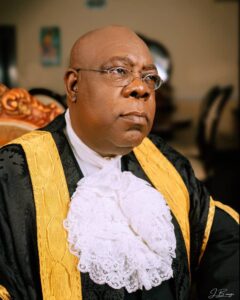
A former Minority Leader of the Ogun State House of Assembly, Hon. Lukman Adeleye, has defended his defection from the Peoples Democratic Party (PDP) to the All Progressives Congress (APC), describing the opposition party as a “burning house” he needed to escape to preserve his political future.
Adeleye made the remarks during an interview on Frontline, a current affairs programme on Eagle 102.5 FM, Ilese-Ijebu, on Monday. He said his decision, alongside other former PDP lawmakers, followed prolonged internal crises, factional disputes, and what he described as a collapse of ideological direction within the party.
“I have come to APC to escape the burning house so that I don’t get consumed in the inferno,” he said. “If you are in a house that is burning and you struggle for survival by escaping, I do not think that is a sin. Political survival is part of the tenets of democracy.”
The lawmaker, who represents Odogbolu State Constituency, explained that the decision to defect was not taken unilaterally but was a collective resolution reached by members of the minority caucus after extensive consultations and political evaluation. He said the move was driven by the need to secure a viable platform for continued political relevance and effective representation of constituents.
Prolonged Crisis in PDP
Adeleye attributed his exit to lingering instability within the PDP, noting that internal wrangling, litigations, and leadership disputes had weakened the party over the years.
“Since 2019, we have been battling one crisis or the other. We thought it would be resolved, but it kept getting worse,” he said. “We went through litigations, Supreme Court battles, and even after the 2023 elections, the crisis persisted.”
He added that uncertainty over the party’s future and conflicting political positions among its leaders further eroded confidence among members.
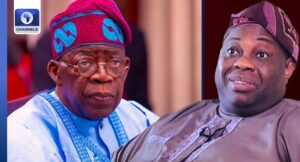
According to him, developments linked to the influence of key party figures, including former Rivers State governor and current FCT Minister, Nyesom Wike, raised concerns about the PDP’s direction and electoral prospects.
“Our political aspirations cannot be achieved under such a regime,” he said.
Ideology and Political Reality
Adeleye acknowledged that ideology remains weak in Nigeria’s political system, describing most parties as platforms for political survival rather than institutions built on clear principles.
“As we speak, ideology in most political parties is not well defined. Our democracy is still evolving,” he said. “We assessed the alternatives and concluded that aligning with the ruling party was the most viable option.”
Denial of Financial Inducement
Responding to allegations that the defection was motivated by financial gain, Adeleye dismissed the claims as baseless.
“To God who made me, I did not receive any kobo. This is not material-driven,” he said. “It is cheap propaganda. Our decision is based on political realities.”
APC Gains Full Control of Assembly
With the latest wave of defections, the Ogun State House of Assembly is now fully controlled by the APC, with all 26 lawmakers belonging to the ruling party. The development effectively ends opposition representation in the legislature.
While the shift has raised concerns about democratic accountability, Adeleye insisted that the Assembly would continue to perform its oversight functions.
“The House of Assembly is not an appendage of the executive,” he said. “We have committees to ensure checks and balances, regardless of party affiliation.”
From Multi-Party to One-Party Legislature
The Assembly’s transformation into a one-party chamber marks a significant political shift. Following the 2023 elections, the legislature comprised 17 APC and nine PDP members. However, a series of defections and legal battles gradually weakened the PDP’s presence.
The turning point began in November 2023 when the Court of Appeal in Lagos nullified the election of PDP lawmaker Babajide Owoduni, further reducing the party’s numbers. Subsequent defections by lawmakers, including Rasheed Kashamu and Lukman Atobatele, accelerated the decline.
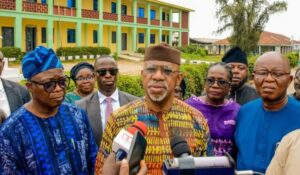
The final blow came with the defection of the remaining PDP lawmakers—Lukman Adeleye, Lawal Samusideen, Adesanya Oluseun Samuel, Owode Waliu Ifedolapo, Bello Oluwadamilare, and Dickson Kolawole Awolaja—effectively handing total control to the APC.
Observers say the absence of opposition lawmakers could weaken legislative scrutiny, though supporters argue it may enhance coordination and governance efficiency.
‘My Mandate Comes from the People’
Despite concerns over his defection, Adeleye maintained that his political mandate remains intact, stressing that his support base transcends party affiliation.
“I have been with my people for over two decades,” he said. “It is not just about party; it is about a people-driven movement.”
He added that the decision to defect followed wide consultations with stakeholders, including traditional rulers, community leaders, and political associates in his constituency.
According to him, the move has been well received at the grassroots level and has already attracted new supporters to the APC.
“This is a masses-driven decision,” Adeleye said. “We are ready to add value and deliver on our democratic mandate.”