By Peace Udugba
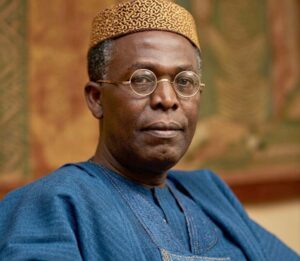
The Secretary-General of the All Farmers Association of Nigeria (AFAN), Otunba Dr. Babafemi Oke, has raised fresh concerns over mounting challenges confronting Nigeria’s agricultural sector, warning that insecurity, inadequate mechanisation, and the near collapse of extension services are undermining productivity and discouraging farmers nationwide.
Oke cautioned that if these issues are not urgently addressed, they could further weaken food systems and deepen the country’s economic vulnerabilities.
Speaking on Sabenko, a Yoruba-language public affairs programme on Eagle 102.5 FM, Ilese Ijebu, Ogun State, he said realities on the ground reveal a widening gap between policy intentions and actual support for farmers.
According to him, while agriculture is frequently promoted as a key solution to Nigeria’s economic challenges, the structural conditions required for its success remain largely absent. He noted that farmers, particularly in rural communities, face rising security risks, limited access to modern tools, and weak institutional support, making farming increasingly risky and less profitable.
INSECURITY HEIGHTENS RISKS FOR FARMERS
Oke expressed deep concern over increasing cases of kidnapping and attacks on farmers, linking the trend to the abandonment of agricultural lands and research institutions. He said many of these locations, once centres of agricultural development, have now become hideouts for criminal elements.
He cited recent incidents involving cocoa farmers who were attacked while working on their farms, noting that such occurrences highlight the consequences of neglecting rural security and critical agricultural infrastructure.
“When we heard about the kidnapping incident of our members, we were unhappy because those abducted are cocoa farmers. They had gone to inspect their farms, and when the incident happened, it became clear that what we failed to take seriously has now affected us,” he said.
He called for urgent, coordinated intervention at the community level, stressing that traditional hunters who understand local terrains and forest networks should be actively involved in tackling insecurity.
NEGLECTED AGRICULTURAL ASSETS
The AFAN scribe also criticised the continued neglect of agricultural assets such as research institutes and farm settlements, describing them as wasted opportunities that could boost food production and rural economies.
He lamented that many of these facilities have deteriorated instead of being utilised for research and large-scale farming. According to him, repurposing them could provide safer and more structured farming environments.
Oke added that AFAN has consistently advocated the allocation of such lands to farmers’ groups for productive use, rather than leaving them idle and vulnerable to criminal activity.
MECHANISATION STILL OUT OF REACH
On mechanisation, Oke described access to modern farming equipment as inadequate and largely inaccessible to average farmers. He noted that despite government efforts to procure machinery, distribution systems do not reflect the financial realities of most farmers.
He pointed out that many farmers still rely on traditional tools such as hoes and cutlasses, which limit productivity and efficiency.
“Imagine someone using a hoe and cutlass on two hectares of land; the work will be poorly done,” he said.
He further explained that the cost of acquiring tractors remains beyond the reach of most smallholder farmers and criticised the requirement for upfront payments before accessing government-provided equipment.
According to him, cooperative farming models have provided some relief, while the introduction of smaller, more affordable machinery could significantly improve productivity if properly implemented.
DISAPPEARANCE OF EXTENSION SERVICES
Oke also lamented the decline of agricultural extension services, describing them as a vital link between farmers and modern farming techniques.
He noted that extension officers, once responsible for training and supporting farmers, are no longer visible in many communities, creating a knowledge gap that contributes to low yields and poor farming outcomes.
“We had extension officers who moved around farms to guide farmers, but we no longer see them,” he said.
He stressed that restoring extension services would improve productivity and encourage greater youth participation in agriculture.
CLIMATE CHANGE PRESSURES
On environmental challenges, Oke highlighted the growing impact of climate change, noting that unpredictable weather patterns have disrupted traditional planting cycles.
He explained that farmers are increasingly uncertain about planting periods, leading to losses. He also linked climate change to deforestation, warning that unchecked tree cutting has worsened environmental conditions and reduced agricultural stability.
CALL FOR STRONGER LEADERSHIP
Oke emphasised that the success of agricultural reforms depends on the commitment of political leaders at all levels. He argued that without genuine interest from both state and federal governments, policies aimed at improving agriculture will remain ineffective.
“You see, if a state governor does not show interest in agriculture and food production, it becomes difficult for others to drive meaningful change. But when leadership prioritises agriculture, progress becomes visible,” he said.
He maintained that tackling insecurity, improving mechanisation, restoring extension services, and strengthening environmental policies must be treated as interconnected priorities. According to him, only a holistic approach can reposition agriculture as a sustainable driver of Nigeria’s economic growth and food security.