By Peace Udugba -The Daily Torch Media
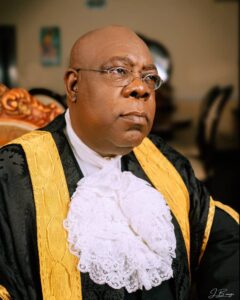
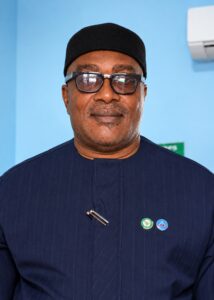
A former Director of the Department of State Services (DSS), Mike Ejiofor, has warned that the 2027 general election could be one of the most violent in Nigeria’s history, citing heightened political rivalry, inflammatory rhetoric and the intense struggle for political power.
Ejiofor attributed the growing tension to the high stakes involved, noting that the ruling party was determined to retain power while opposition parties were equally determined to take over government.
He gave the warning on Thursday during an exclusive interview on Frontline, a current affairs programme on Eagle 102.5 FM, Ilese-Ijebu, Ogun State.
The security expert expressed concern over increasing political tension and attacks involving supporters of different political parties ahead of the 2027 elections.
According to him, the language being deployed by political actors, including threats of electoral violence and expressions such as “rig and die”, could further worsen the political atmosphere.
“This 2027 election is going to be one of the most violent in Nigeria’s history. The reasons are obvious. The stakes are high. The incumbent wants to continue, and the opposition wants to take over power by all means,” he said.
Ejiofor, who clarified that he was not a politician, said he was compelled to speak on political developments because of their implications for national security.
He reminded political actors that the primary responsibility of government was to ensure the welfare and security of the people.
He urged politicians across party lines to concentrate on presenting their programmes and achievements rather than encouraging hostility among their supporters.
“Every patriotic Nigerian must be concerned with the political rhetoric ongoing in Nigeria. Unfortunately, let me make one clarification: I am not a politician. I don’t discuss politics. But there is a thin line between what is going on in politics now and security.
“The issue is that our politicians should be reminded that politics is about service to the people and that the primary purpose of government is the welfare and security of the people,” Ejiofor said.
The former DSS director also linked growing public resentment to economic hardship, arguing that the government had not made sufficient efforts to explain its economic policies, particularly to people at the grassroots.
He noted that although the government had defended its economic reforms as necessary for long-term benefits, many Nigerians remained more concerned about their immediate economic challenges.
“The APC-led government is controlled by 32 state governments, and yet you see resentment among the populace. The problem remains that people are hungry.
“The government has come out in defence of its policy, saying it will come with hardship, but the average man on the street does not understand macroeconomics. I don’t think government functionaries are making sufficient efforts to educate the people, especially at the grassroots,” he said.
Ejiofor warned that increasing attacks on political figures and supporters across the country could undermine democracy if not urgently addressed.
He called on security agencies to intensify efforts to prevent political violence, stressing that failure to tackle the situation could result in a breakdown of law and order.
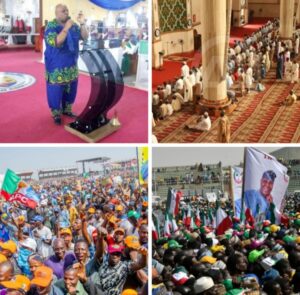
He referenced incidents involving President Bola Tinubu at the National Mosque in Abuja, the Labour Party’s 2023 presidential candidate, Peter Obi, in Delta State, and former Vice President Atiku Abubakar.
He maintained that political disagreements and grievances should never be allowed to degenerate into violence.
Speaking on the incident involving Tinubu at the National Mosque, Ejiofor suggested that restrictions placed on people’s businesses and means of livelihood around the area ahead of the President’s visit might have contributed to the reaction.
“There shouldn’t have been an attack on the President when he went to worship at the mosque last Friday. But what happened was that people’s means of livelihood within that area was halted that day because the President was coming.
“They asked everybody within those areas to stop whatever they were selling. I think that was what aggravated them,” he explained.
However, he condemned the incident, while acknowledging the need for security restrictions during presidential movements. He argued that the measures imposed around the mosque appeared excessive.
The former DSS director also expressed concern over what he described as the perceived partisan handling of political violence.
According to him, attacks involving opposition parties were often blamed on the ruling party, while incidents involving the ruling party were attributed to the opposition or aggrieved Nigerians.
He urged security agencies to remain neutral and ensure that anyone involved in political violence was held accountable, irrespective of political affiliation.
“The security agencies are expected to be neutral. You see, you are not in a military government where you have regime protection, although an incumbent government also needs to be protected,” he said.
Ejiofor stressed that the responsibility of security agencies should go beyond arrests to include thorough investigations, prosecution and convictions to serve as deterrents.
He also criticised the denial of venues to opposition parties and the destruction of their campaign billboards in some states, describing such actions as contrary to democratic principles.
To address the growing political tension, he called on the Federal Government to convene a national stakeholders’ meeting involving political party leaders, civil society organisations and other relevant groups.
He said the meeting would provide an opportunity to address emerging concerns and warn political actors against actions capable of triggering a breakdown of law and order.
“I think a major stakeholders’ meeting should be summoned by the Federal Government, inviting all the political party leadership and civil society organisations, to warn of the consequences of certain things that are done or left undone that could lead to a breakdown,” Ejiofor suggested.
On preparations for the 2027 general election, he urged the Office of the National Security Adviser (NSA) to strengthen coordination among security and law enforcement agencies, including the DSS, Nigeria Police Force, military, Economic and Financial Crimes Commission (EFCC), Nigeria Security and Civil Defence Corps (NSCDC) and the Independent National Electoral Commission (INEC).
He said intelligence agencies should provide timely information to prevent electoral violence, while the NSA should regularly convene security meetings to assess emerging threats and coordinate responses.
Ejiofor also urged INEC to ensure a fair and credible electoral process, warning that allegations of bias and a lack of public confidence in the commission could fuel political frustration.
While acknowledging concerns arising from the 2023 general election, he advised opposition parties to give the electoral commission another opportunity to conduct the next polls.
He cited the recent off-cycle governorship elections in Osun and Anambra states, which he said demonstrated that INEC could conduct credible elections.
“Let’s give INEC the chance to see how they can go. The few off-cycle elections, like Osun and Anambra, I think INEC did very well. But this is a general election, so we expect more from them to make sure that they also accredit the process,” he said.
The former DSS director further identified fake news, recycled political statements and artificial intelligence-generated videos as emerging threats to the 2027 electoral process.
He warned that old statements and manipulated videos were being circulated as fresh political developments to mislead voters and influence public opinion.
He urged Nigerians to verify information before accepting or sharing political content on social media.
“I have seen a lot of videos, things that happened in 2023. Statements made in 2023 are being used again and recycled to campaign for the President. But they will not tell you that these are old statements. So, if you take it at face value, it goes to deceive the people,” he said.
Ejiofor also cautioned religious leaders, traditional rulers and civil society organisations against making statements capable of escalating political tensions.
He called for responsible public communication and greater cooperation among political stakeholders and security agencies to safeguard lives, protect democratic institutions and ensure peaceful elections in 2027.
Tags: Mike Ejiofor, 2027 Elections, DSS, INEC, Political Violence, Nigeria Politics, National Security, Peter Obi, Bola Tinubu, Atiku Abubakar.