By Peace Udugba
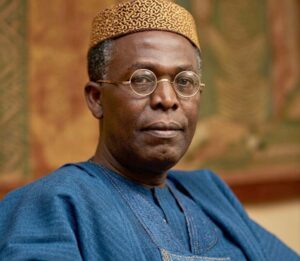
Former Kaduna Central Senator, Shehu Sani, has ruled out the possibility of former Vice President Atiku Abubakar and former Anambra State Governor Peter Obi stepping down for each other ahead of the 2027 presidential election.
Sani made the assertion on Tuesday while speaking as a guest on Frontline, a current affairs programme on Eagle 102.5 FM, Ilese-Ijebu, Ogun State.
He said opposition politicians had waited too long to resolve their differences and agree on a single presidential candidate capable of mounting a strong challenge to President Bola Ahmed Tinubu in 2027.
His comments came amid renewed efforts by opposition politicians and groups to forge alliances ahead of the election.
Sani argued that the possibility of Atiku and Obi agreeing to a single presidential ticket had become increasingly difficult because both politicians had built their own political structures and presidential ambitions.
“These are decisions they ought to have taken before now,” he said.
According to the former senator, the opposition would have had a better chance of producing a formidable candidate if negotiations over a consensus presidential candidate had started much earlier.
He pointed to the period when some of the opposition figures were still associated with the African Democratic Congress (ADC) as a missed opportunity.
“If they were able to work that out when they were all in ADC, that would have been better for them,” Sani said.
Atiku, Obi Have Built Political Structures
Sani said the major opposition contenders had already invested substantial political capital in their respective presidential ambitions, making it difficult for either of them to withdraw in favour of the other.
“It’s not possible for Atiku to step down for Peter Obi and it’s not possible for Peter Obi to step down for Atiku,” he said.
He also cited Atiku’s emergence as the presidential candidate of the ADC and his selection of former Rivers State Governor, Rotimi Amaechi, as his running mate as further evidence of the difficulty of restructuring the ticket.
The ADC announced Amaechi as Atiku’s running mate in June after the former Rivers governor came second in the party’s presidential primary.
“Atiku has already picked his vice-president, which is Rotimi Amaechi,” Sani said.
He added that Obi had also established his own political structure and was pursuing his presidential ambition through another opposition platform.
Obi, who was the Labour Party’s presidential candidate in the 2023 election, left the ADC in May 2026 and joined the Nigeria Democratic Congress (NDC), where he was subsequently cleared to contest the party’s presidential primary.
Sani said the various opposition figures had already mobilised supporters and begun preparations for the 2027 contest.
“If they couldn’t put their house in order when they were all in ADC, is it now that everyone has taken position, has mobilised his people, printed his posters and billboards, that you’re talking of one candidate?” he asked.
‘Opposition Meetings May Not Produce Breakthrough’
The former senator said opposition leaders could continue meeting and negotiating, but expressed doubts that the discussions would produce a major breakthrough.
According to him, the challenge was not simply the absence of meetings but the difficulty of persuading major presidential contenders to sacrifice their individual ambitions.
“If Atiku was interested in one candidate, he would have dropped down for Peter Obi. If Peter Obi was interested in one candidate, he would have dropped down for Atiku,” Sani said.
He recalled how the All Progressives Congress (APC) consolidated different political interests behind Muhammadu Buhari ahead of the 2015 presidential election.
“That was what APC did in 2014. Everyone sacrificed ambition and rallied around Buhari, and then Buhari defeated Jonathan,” he said.
Sani argued that the current opposition landscape was different because the major contenders appeared unwilling to make similar sacrifices.
Regional Factor Could Complicate 2027 Opposition Alliance
Sani also identified regional considerations as another major obstacle to the emergence of a consensus opposition candidate.
He noted that Atiku, a northerner, could face questions over the level of support he would receive in the South, particularly amid arguments that the presidency should return to the South after President Tinubu’s tenure.
“This is the turn for the South to produce an eight-year president,” Sani said.
He argued that asking Atiku to step aside for Obi could generate resistance among Atiku’s supporters in the North.
Similarly, he said asking Obi to withdraw in favour of Atiku could alienate supporters who believe the South should produce the next president.
Sani therefore maintained that the opposition’s failure to resolve the issue early had weakened its chances of presenting a united front against the APC.
He said political alliances must be based on realistic political calculations and willingness to compromise rather than last-minute negotiations.
Sani’s comments come as opposition politicians continue efforts to build alliances ahead of the 2027 presidential election, with several groups seeking to present a stronger challenge to President Tinubu and the ruling APC.