By Peace Udugba -The daily torch media
Sterling Bank Charts Path for Growth in Nigeria’s Transport, Logistics Sector
Lagos, Nigeria — Industry leaders, policymakers, financiers, and innovators convened in Lagos for the inaugural Nigeria Transport & Logistics Summit (NTLS) 2026, hosted by Sterling Bank at Eko Hotel & Suites, to develop actionable strategies for building a faster, more connected nation through transport, mobility, and logistics.
Held under the theme “Funding the Engine of Growth,” the summit spotlighted Nigeria’s transport and logistics sector as a critical yet underutilised driver of productivity, regional integration, and economic expansion.
Experts at the summit noted that while the logistics sub-sector contributes about ₦1 trillion to Nigeria’s GDP, the broader transport and logistics market holds an estimated potential value exceeding ₦15 trillion. However, persistent infrastructure deficits, inefficiencies, financing constraints, and policy fragmentation continue to hinder the sector’s full potential.
The summit brought together senior government officials, regulators, infrastructure operators, investors, development partners, and private sector leaders to address key priorities, including multimodal connectivity, airport and road modernisation, energy-efficient mobility, digital trade facilitation, and innovative financing frameworks.
Speaking at the event, Sterling Bank’s Managing Director and Chief Executive Officer, Abubakar Suleiman, who was represented by the CEO of Sterling One Foundation, Olapeju Ibekwe, called for urgent and coordinated efforts to address systemic challenges in the sector.
He emphasised that while issues such as port congestion, inefficient transport corridors, and high operating costs are well known, the real opportunity lies in effective execution.
“We must move beyond diagnosing the problem to building integrated, modern logistics systems that can drive productivity at scale. This includes fixing our ports, strengthening logistics corridors, improving road and rail connectivity, and embedding efficiency across the value chain,” he said.
He added that Nigeria’s competitiveness, both regionally and globally, will increasingly depend on how effectively goods, people, and services are moved across the country, stressing that bold and coordinated action is now required.
Also speaking, the Divisional Head of Renewable Energy, Mobility and Tourism at Sterling Bank, Darlington Nwankwo, described logistics as the backbone of trade, industry, and national competitiveness.
He noted that although the sector contributes just under four per cent to Nigeria’s GDP—estimated at about ₦15 trillion—its broader impact as an enabler of productivity across agriculture, manufacturing, and trade is far greater.
“We must be deliberate about fixing the logistics backbone of the economy to unlock the growth we need. Nigeria’s trade competitiveness is directly tied to the efficiency of its logistics corridors, from ports to inland distribution networks,” he said.
Nwankwo added that Sterling Bank is focused on connecting capital to execution by designing financing solutions that not only fund infrastructure but also unlock entire value chains. He highlighted support for multimodal transport systems, cleaner mobility solutions, and partnerships aimed at reducing investment risks.
Lagos State Commissioner for Transportation, Oluwaseun Osiyemi, also called for bold ideas, strategic investments, and forward-looking policies. He described the summit as a critical platform for shaping the future of mobility, trade, and connectivity in Nigeria, urging stakeholders to move swiftly from planning to implementation.
In his keynote address, economist Biodun Adedipe underscored the need for diversification within the sector, noting that nearly 90 per cent of Nigeria’s logistics depends on road transport. He warned that this overreliance contributes to congestion and high maintenance costs, stressing the need to expand rail infrastructure and develop more durable transport systems.
He also cautioned that meaningful economic transformation would require time, noting that significant results may not be realised within 18 months.
Panel discussions at the summit focused on reducing logistics costs, improving aviation and road integration, modernising downstream energy distribution, and accelerating the adoption of cleaner and more sustainable mobility solutions.
The summit concluded with a call for sustained public-private collaboration, improved regulatory coordination, and the creation of structured financing vehicles to de-risk infrastructure investments.
As Nigeria seeks to strengthen its regional trade position and boost non-oil exports, NTLS 2026 is seen as a significant step toward building a more integrated, resilient, and globally competitive transport and logistics ecosystem.
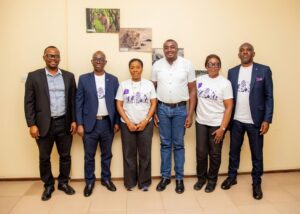
L-R Olapeju Ibekwe, CEO, Sterling One Foundation; Darlington Nwankwo, Divisional Head, Renewable Energy, Mobility and Tourism, Sterling Bank; Oluwaseun Osiyemi, Honorable Commissioner for Transportation, Lagos State: and Moyomade Akinyosoye, Divisional Head, Institutional Banking, Sterling Bank, at the recently concluded Nigeria Transport and Logistics Summit, hosted by Sterling Bank in Lagos recently.