By Peace Udugba — The Daily Torch Media
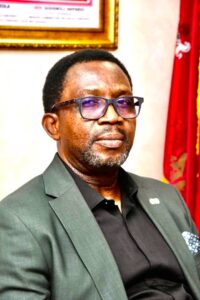
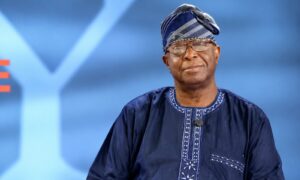
Nigeria’s ability to command respect and influence on the international stage is closely linked to how the country is governed at home, Professor Femi Otubanjo of the Nigerian Institute of International Affairs (NIIA) has said.
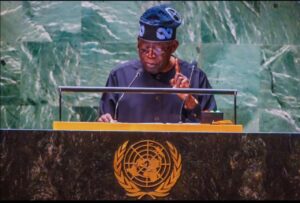
Otubanjo made the submission on Tuesday while speaking on Frontline, a current affairs programme on Eagle 102.5 FM, Ilese-Ijebu, Ogun State, during a discussion on President Bola Tinubu’s absence from the 81st United Nations General Assembly (UNGA) in New York.
According to the professor, “a nation’s domestic image determines its international image.”
He said Nigeria could not separate its international reputation from the experiences of its citizens and the manner in which government manages the country’s affairs.
Otubanjo noted that advances in technology and the speed of information dissemination had made it increasingly difficult for countries to conceal domestic realities from the international community.
“There is no remote country, as information is easily accessed from any location on earth.”
His comments came amid debate over Nigeria’s representation at the 81st UNGA, where Vice President Kashim Shettima is leading the Nigerian delegation on behalf of Tinubu.
Shettima is expected to deliver Nigeria’s national statement on Thursday and participate in high-level and bilateral meetings during the General Assembly.
The Federal Government has said he is attending with the full mandate of the President and that Nigeria’s interests will be fully represented.
Otubanjo Calls for ‘Domestic Reset’
Otubanjo argued that Nigeria’s international standing should not be measured solely by the physical presence of its leaders at major diplomatic gatherings.
He called for what he described as a “domestic reset” in governance, stressing the importance of good governance, accountability, transparency and prudent management of public resources.
According to him, Nigeria’s aspirations on the international stage would carry greater weight when they are supported by confidence in the country’s institutions and the effective management of public resources.l
He said Nigeria’s ambition to retain its position as the Giant of Africa and exercise greater influence in continental and global affairs must be matched by greater attention to the welfare of its citizens.
Professor Questions Government Spending
Otubanjo also raised concerns about government expenditure, using what he described as recent spending decisions to question government priorities.
He alleged that the Federal Government had spent N21 billion on the Vice President’s residence, $150 million on an aircraft and N90 billion on the Hajj pilgrimage, arguing that public expenditure should be assessed against the needs of ordinary Nigerians.
Otubanjo said the issue went beyond individual spending decisions to the broader perception created when government expenditure is viewed against the economic difficulties confronting citizens.
> “Nigeria has leaders who don’t know how to order their priorities and focus on their people.”
The figures cited by Otubanjo have also featured in previous public debates over government spending, although individual expenditure figures and their descriptions have been reported differently by various sources.
Nigeria’s Global Ambitions
The NIIA professor linked Nigeria’s domestic governance to its ambition to play a stronger role internationally.
He said Nigeria seeks to maintain its position as the Giant of Africa, strengthen its influence within organisations such as the African Union and ECOWAS, and push for greater African representation in global decision-making institutions, including reform of the United Nations Security Council.
The 81st UNGA General Debate is taking place from September 22 to 28, 2026, under the theme, “Restoring trust, managing transformation: A United Nations that delivers for all.” Nigeria is represented by a delegation led by Shettima, who is expected to advance the country’s positions on international cooperation, development, peace and security and reform of global institutions.
‘National Interest Is the Main Thing’
On Tinubu’s absence from the UNGA, Otubanjo said the President’s physical presence should not be regarded as the only measure of Nigeria’s diplomatic engagement.
He argued that Nigeria could pursue its interests through the Vice President, ministers, ambassadors and other officials assigned to international engagements.
> “The main thing is Nigeria’s national interest.”
The Federal Government has similarly maintained that Shettima is representing Tinubu with the President’s full mandate and that his participation in the General Assembly will advance Nigeria’s diplomatic priorities.
Meanwhile, former Vice President Atiku Abubakar and other opposition voices have questioned Tinubu’s continued absence from the country and the UNGA, while the Federal Government has rejected suggestions that the President’s absence diminishes Nigeria’s diplomatic standing.
Tinubu departed Abuja on August 30 for a three-week annual leave in Europe. The Presidency announced on September 21 that he had extended his working vacation by a few days and was expected to return to Nigeria at the weekend.
For Otubanjo, however, the broader issue extends beyond whether the President is physically present at the UNGA.
His central argument is that Nigeria’s credibility abroad is ultimately connected to what happens within the country and how citizens experience governance.
“A nation’s domestic image determines its international image,” he said.