By Peace Udugba
The ninth edition of the Lagos Leather Fair (LLF 2026) concluded successfully after bringing together industry leaders, policymakers, financial institutions, development partners, and creative entrepreneurs to advance sustainable growth and innovation in Africa’s leather industry.
The event reinforced the immense potential of Africa’s leather sector, with participants emphasising the need to strengthen local value chains, boost artisanal craftsmanship, and promote intra-African trade as key drivers of economic development.
Speaking at the opening ceremony, the Minister of Industry, Trade and Investment, Dr. Jumoke Oduwole, reaffirmed the Federal Government’s commitment to expanding local value chains, supporting artisanal production, and creating an enabling environment for micro, small and medium-sized enterprises (MSMEs) to compete globally.
Founder of the Lagos Leather Fair, Mrs. Femi Olayebi, reflected on the platform’s journey since its inception in 2017, noting that while the fair has made significant progress in promoting Africa’s leather industry, there is still much work to be done.
“While all we have achieved is commendable, we must also recognise that our work is far from done. Buildings do not build industries. Machines alone do not create ecosystems. The right blueprint needs to be put in place,” she said.
Olayebi reiterated the fair’s commitment to positioning Africa’s leather industry on the global stage through talent development, sustainable manufacturing, and stronger collaboration among industry stakeholders. She also expressed appreciation to the event’s partners, sponsors, exhibitors, and supporters for their continued commitment to the growth of the sector.
The fair featured keynote presentations from development and financial institutions, highlighting the importance of strategic partnerships in unlocking the full potential of Africa’s leather industry.
The Resident Representative of the United Nations Development Programme (UNDP), Ms. Elsie Attafuah, underscored the connection between industrialisation, regional trade, and economic empowerment, noting that the growth of the leather industry aligns with Africa’s broader sustainable development agenda.
Also speaking, Ecobank’s Head of SME and Partnerships, Mrs. Omoboye Odu, reaffirmed the bank’s commitment to supporting local entrepreneurs through sustainable financing and strategic partnerships designed to help leather businesses scale and thrive.
One of the highlights of the fair was a vibrant mini-runway presentation showcasing premium leather fashion products crafted from locally sourced materials, demonstrating the creativity and commercial potential of Nigeria’s leather industry.
Dr. Oduwole officially declared the exhibition open, commending the Lagos Leather Fair for promoting industrialisation, creating employment opportunities, and supporting Nigeria’s economic diversification agenda.
The exhibition attracted exhibitors, buyers, investors, and fashion enthusiasts from across Nigeria and beyond, providing opportunities for business networking, market expansion, and knowledge sharing throughout the event.
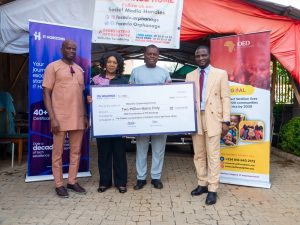
Organised in partnership with Ecobank Business, Lagos Leather Fair 2026 was sponsored by the Bank of Industry, Kharis Engineering Services Ltd., Leadway, and the Development Bank of Nigeria (DBN), alongside several media and creative partners.
Founded in 2017 by premium leather goods designer Femi Olayebi, the Lagos Leather Fair remains Nigeria’s first dedicated platform focused exclusively on the leather industry. Established to address structural challenges within the sector, the fair has evolved into a leading platform connecting designers, manufacturers, suppliers, policymakers, and investors while promoting Nigerian and African leather products on the global stage.
As the 2026 edition came to a close, organisers expressed optimism that the conversations, partnerships, and innovations showcased during the fair would contribute significantly to the continued growth and global competitiveness of Africa’s leather industry.
Exhibitors at the ninth edition of the Lagos Leather Fair (LLF 2026) highlighted the event’s growing impact on Africa’s leather industry, describing it as a vital platform for innovation, sustainability, collaboration, and the promotion of indigenous craftsmanship.
Speaking with The Daily Torch Media during the fair, the Creative Director and Founder of Morin.O, Morin (Maureen) Obaweya, said the Lagos Leather Fair continues to expand in size, reach, and influence, attracting more stakeholders into the leather ecosystem each year.
According to her, the increasing participation and awareness generated by the fair are strengthening collaboration across the industry and creating opportunities for brands to scale sustainably.
“The Lagos Leather Fair grows bigger every year, bringing more stakeholders into the ecosystem. This greater collaboration will drive the need for brands and the industry to scale,” she said.
Also speaking, a representative of Tender Leather Care, Jesutofumi, said the company is committed to promoting leather restoration and sustainable leather care by educating consumers on the proper maintenance of leather products.
She described Tender Leather Care as a leather restoration company dedicated to extending the lifespan of leather items through professional care and restoration.
“Tender Leather Care is a leather restoration company where we bring leather back to life. It’s not just about having leather; it’s about how you take care of it. That’s what we do,” he said.
Jesutofumi added that the company’s participation in the fair was aimed at encouraging sustainability by teaching consumers how proper leather care can preserve products for many years.
“Our expectation is to enlighten people not just to celebrate leather, but also to embrace sustainability by caring for their leather properly so they can enjoy it for a longer time,” he added.
Founder and Creative Director of Renne the Brand, Lamide Samuel, also reaffirmed the company’s commitment to promoting locally made leather products and supporting indigenous craftsmanship.
Samuel, whose brand has been producing leather handbags since 2016, said LLF 2026 marked the company’s fourth appearance at the fair, providing an opportunity to showcase its latest collection and engage directly with customers.
She explained that Renne the Brand works with local artisans in Lagos, using leather sourced within Nigeria and traditional leather-making techniques handed down through generations.
While some accessories, including buckles and logo plates, are imported due to limited local production, she noted that the brand sources its packaging and most other materials locally.
Samuel, however, expressed concern over rising production costs, citing increases in the prices of leather, accessories, and labour. She said inflation has placed additional pressure on artisans, who now require higher wages to cope with the increasing cost of living.
Despite these challenges, Samuel reaffirmed the brand’s commitment to producing high-quality leather products while showcasing Nigeria’s creativity and craftsmanship on a larger stage.