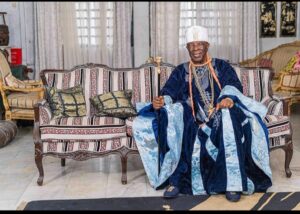
Asiwaju Kunle Kalejaye, SAN, Chairman, Eagle 102.5 FM, Ilese-Ijebu.
Federalism, as a political concept, distributes governmental powers between the central authority and constituent states, ensuring that the federating units do not become mere administrative extensions of the Federal Government. However, tensions often arise when federal oversight intersects with the constitutional responsibilities of state institutions.
One such area of friction is the exercise of the National Judicial Council’s (NJC) oversight functions in relation to the State Judicial Service Commission (JSC), particularly in the appointment of a substantive Chief Judge of a state.
The NJC serves as a key constitutional institution responsible for safeguarding the independence, integrity and discipline of the Nigerian judiciary. Exercising its powers under Section 153(1) and the Third Schedule to the 1999 Constitution, as amended, the Council is mandated to protect the judiciary from political interference and uphold established judicial conventions.
According to the NJC’s official profile, the Council was established to insulate the judiciary from the whims and caprices of the Executive and guarantee the independence of the judicial arm of government, which is considered essential to democratic governance.
In the context of the Imo State judicial impasse, the Council has positioned itself as a custodian of the seniority convention in the appointment of a substantive Chief Judge. This position is reinforced by Section 271(4) of the Constitution, which provides for the appointment of the most senior judge of the state’s High Court where the office of the Chief Judge becomes vacant.
The controversy followed the retirement of Justice T.E. Chukwuemeka Chikeka. State authorities initially bypassed the established seniority order by appointing Justice Theophilus Nzeukwu, reportedly ranked fourth among the judges, as Acting Chief Judge.
The NJC subsequently rejected the appointment, relying on the constitutional provisions governing the succession to the office.
Although the state’s most senior judge, Hon. Justice Ijeoma Agugua, was eventually sworn in as Acting Chief Judge, her omission from the shortlist subsequently prepared by the State Judicial Service Commission for the substantive appointment raised further questions about the relationship between the state’s constitutional autonomy and the NJC’s oversight responsibilities.
The development has brought into focus competing interpretations of the constitutional provisions governing judicial appointments.
Under Section 271 of the 1999 Constitution, the Governor appoints the Chief Judge of a state on the recommendation of the NJC, based on the advice of the State Judicial Service Commission. At the same time, Section 202 provides that the State Judicial Service Commission shall not be subject to the direction or control of any other authority or person in exercising its constitutional functions.
Citing Section 202 and the Supreme Court decision in Attorney-General of the Federation v. Attorney-General of Abia State (2024), the Imo State Attorney-General, Hon. Paul Obinatu, reportedly argues that the State Judicial Service Commission enjoys autonomy in preparing its shortlist.
According to this position, although the NJC has the authority to approve or reject recommendations submitted to it, it cannot dictate the names that should form part of the initial nomination pool.
However, this argument raises questions about how the relevant constitutional provisions have been interpreted and harmonised by the courts.
In Hon. Justice Raliat Elelu-Habeeb & Anor v. Attorney-General of the Federation & Ors (2012), the Supreme Court considered the relationship between the constitutional autonomy of judicial service commissions and the NJC’s appointment powers.
The decision underscores the need to interpret the relevant constitutional provisions together rather than in isolation, thereby recognising the respective responsibilities of the institutions involved in the appointment process.
Similarly, judicial decisions, including Federal Republic of Nigeria v. Hon. Justice Hyeladzira Ajiya Nganjiwa (2022) and Kayode Bamisile v. National Judicial Council & Ors (2012), have featured in discussions concerning the NJC’s constitutional responsibilities and the protection of judicial independence.
The central issue, therefore, is whether the State Judicial Service Commission’s autonomy in preparing its shortlist can be exercised in a manner that undermines established constitutional requirements and judicial conventions.
Historical experience suggests that similar disagreements have occurred in other states, including Cross River, Abia, Kebbi and Gombe, where disagreements over the appointment of substantive Chief Judges generated institutional tensions.
In the Cross River State controversy involving Justice Akon Ikpeme, for instance, the question of seniority and judicial succession became a significant constitutional issue. Similar disagreements in other states have also highlighted the importance of reconciling state-level appointment procedures with the NJC’s constitutional mandate.
Ultimately, the NJC’s oversight role is intended to ensure that judicial appointments are conducted in a manner that protects the judiciary from political influence and preserves public confidence in the administration of justice.
As Senior Advocate of Nigeria Okutepa aptly observed:
“The office of Chief Judge is a public trust, and its occupants must emerge through a process that commands confidence in the independence, integrity and fairness of the judiciary.”
Bypassing senior judicial officers without clear, documented and verifiable reasons capable of justifying such decisions risks creating the impression of favouritism, political patronage and interference in the judicial system.
These concerns are consistent with the warning expressed in National Judicial Council & Ors v. Hon. Mr. Justice C.P.N. Senlong & Ors (2010), where Mary Peter-Odili, JCA, as she then was, emphasised that the constitutional powers of the NJC must not be frustrated by individuals or authorities, regardless of their positions.
She stated that the powers exercisable by the NJC “are not to be scuttled or frustrated by any one in whatever position or authority.”
Resolving the Imo State judicial impasse therefore requires a careful constitutional approach that recognises the respective powers of the State Judicial Service Commission, the Governor and the National Judicial Council.
Judicial independence cannot be protected by constitutional provisions alone. It also requires respect for established conventions, institutional integrity and transparent appointment procedures.
Ultimately, the credibility of the judiciary depends not only on the quality of those appointed to judicial offices but also on the fairness and constitutional legitimacy of the process through which they emerge.
Tags: NJC, Imo State Judiciary, Chief Judge Appointment, Judicial Independence, Nigerian Constitution, State Judicial Service Commission, Kunle Kalejaye SAN.