By Peace Udugba -The daily torch media
The Managing Director of Renaissance Africa Energy Company Limited, Tony Attah, has projected that Nigeria’s indigenous oil and gas sector will witness significant consolidation in the next decade, with the emergence of about five major independent operators.
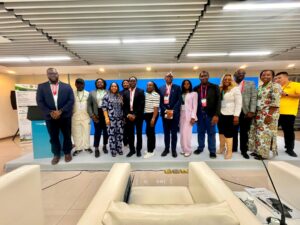
Attah made this known while delivering a lecture at the Nigerian Content Academy, where he spoke on “Finding Funds for Effective and Efficient Local Content Initiatives – IPPG Perspective.”
According to him, collaboration and strategic mergers will define the future of the global energy industry, noting that Nigerian independents must align with this reality to remain competitive.
He observed that indigenous companies have grown in both operational and financial capacity, enabling them to successfully acquire and manage oil assets divested by International Oil Companies (IOCs).
“In other parts of the world, international independents take over from IOCs exiting mature basins. In Nigeria, indigenous players are stepping in, and that transition is already creating value,” Attah said, adding that more than 50 per cent of the country’s crude oil production is now linked to independent operators.
He cited the formation of Renaissance Energy as a model of successful collaboration, involving companies such as ND Western Limited, Aradel Energy Limited, Waltersmith Petroleum Development Company Limited, First Exploration and Petroleum Development Limited, and Petrolin Trading Limited.
The Renaissance MD attributed the success of the consortium to strong collaboration, ambition, and persistence among the participating firms.
Attah, a former Managing Director of Nigeria LNG Limited and Shell Nigeria Exploration and Production Company, also outlined key funding instruments available to energy sector players navigating global financial constraints.
These include capital market listings, private equity, Eurobonds, strategic partnerships and joint ventures, IOC carry arrangements, prepayment and offtake financing, as well as traditional bank facilities.
He emphasized the importance of meeting “bankability criteria,” such as proven reserves, sound corporate governance, stable production profiles, robust hedging strategies, and strong health, safety, and environmental performance.
Attah further urged industry players to adopt what he described as the “ABC” mindset — Ambition, Belief, and Courage — stressing that funding gaps should be seen as opportunities rather than setbacks.
“Without structure, governance, and ambition, nobody will finance you,” he warned, cautioning companies against weak business models, overreliance on projected profits, and fragile balance sheets.
On regional financing efforts, Attah acknowledged the establishment of the African Energy Bank by the African Petroleum Producers’ Organisation and African Export-Import Bank, with support from the Nigerian Content Development and Monitoring Board.
However, he noted that the bank is yet to attain the financial capacity required to fully meet Africa’s energy funding needs, calling for more initiatives to bridge the gap.
He also stressed that local content in Nigeria has moved beyond policy discussions to a matter of capital execution, warning that newly acquired assets risk underinvestment without adequate funding.
During the question-and-answer session, participants raised concerns over delayed payments to service providers by some indigenous operators. Attah advised companies to uphold contractual obligations, noting that credibility and reputation are critical to growth.
“Your business will not grow if you keep owing,” he said.
Earlier in her remarks, General Manager of the Nigerian Content Academy, Doris Opuwari, highlighted funding constraints as a longstanding challenge for indigenous players, expressing optimism that the lecture would provide practical solutions.
In his closing remarks, Director of Corporate Services at the NCDMB, Abdulmalik Halilu, commended Attah for what he described as a comprehensive and insightful presentation.