By Peace Udugba -The Daily Torch Media
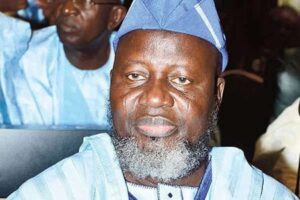
Former Minister of Communications, Dr. Adebayo Shittu, has called on the Federal Government to prioritise education and human-capital development, arguing that quality education must be treated as a fundamental constitutional right rather than a burden financed through student loans.
Speaking on Tuesday during an interview on Frontline, a current affairs programme on Eagle 102.5 FM, Ilese-Ijebu, Ogun State, Shittu stated that government policies should focus on creating equal opportunities for children from underprivileged backgrounds. He stressed that access to education must be prioritized alongside employment, healthcare, and general public welfare.
The former minister questioned the rationale behind relying on loans to support students at a time when many Nigerian graduates struggle to secure employment years after leaving university.
“Today, we have in this country graduates who graduated ten years ago and are still looking for jobs. They don’t have jobs and they are talking about giving them loans. I don’t believe in loans. I believe in fundamental rights,” he said.
He urged citizens and policymakers to examine Chapter II of the 1999 Constitution regarding educational objectives, arguing that the government bears a clear responsibility to provide accessible education and create conditions that enable citizens to fulfill their potential.
Shittu emphasized that educating youth should reflect traditional communal values rather than being left entirely to struggling families.
“In our local community, a child born into a community is the responsibility of the entire community to train, to educate, and to provide for,” he noted.
Highlighting that Nigeria possesses the resources to improve access to learning, Shittu pointed to Rwanda as an example of a nation making strategic, high-impact investments in human capital. He recalled that previous Nigerian administrations successfully funded free education and healthcare, proving that the current obstacle is a matter of resource allocation and political willpower.
Expressing deep concern over widespread economic hardship, the former minister revealed that he regularly receives pleas from students who cannot afford basic necessities, including food.
He maintained that the success of any government policy must be measured by its direct impact on ordinary Nigerians. Investing in free education, vocational training, and social welfare, he argued, would significantly reduce future crime and social unrest by equipping young people with meaningful skills.