By Peace Udugba — The Daily Torch Media
The Economic and Financial Crimes Commission (EFCC) has urged Christian and Muslim leaders across Nigeria to intensify teachings against corruption, fraud and other financial crimes.
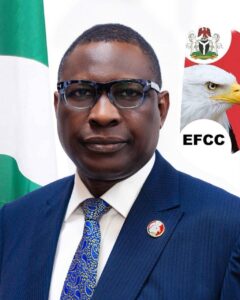
EFCC Chairman, Ola Olukoyede, made the call on Wednesday, September 23, 2026, in Abuja at the 2026 Second Council Meeting of the Nigeria Inter-Religious Council (NIREC), where the Anti-Corruption Interfaith Manual for Religious Leaders was launched.
Olukoyede said religious institutions have an important role in shaping the values and character of Nigerians, particularly by promoting honesty, integrity and responsible use of public resources.
Speaking on the theme, “Shared Sacred Flourishing in Nigeria,” the EFCC chairman said corruption undermines collective prosperity and affects the wellbeing of citizens.
He urged religious leaders to use their influence to promote honest living and discourage practices that encourage corruption and financial crimes.
According to Olukoyede, corruption “privatizes what is shared, converts the commonwealth into private advantage, and allows one person to flourish by making many others poorer.”
He said the EFCC’s mandate includes protecting the integrity of Nigeria’s commonwealth through the investigation and prosecution of financial crimes.
‘Corruption Has No Religion’
Olukoyede said Christians and Muslims could maintain their distinctive beliefs and traditions while working together to promote peace, justice, human dignity and national development.
He said the EFCC had, over the years, engaged Christian and Muslim leaders through its interfaith framework to encourage the incorporation of anti-corruption messages into religious teachings.
“We believe that no religion condones corruption and no faith entertains fraudulent engagements,” he said.
The EFCC chairman said the newly launched manual was developed with the participation of leaders from both faiths and contains relevant doctrinal positions from the holy books on corruption.
He urged pastors and imams to use the manual to educate their followers on the consequences of corruption and financial crimes.
Olukoyede stressed that corruption and financial crimes affect Nigerians regardless of their religious or ethnic backgrounds.
“Financial crime has no religion. Corruption has no tribe. Fraud does not become Christian or Muslim because of the identity of the person accused of committing it,” he said.
He noted that the diversion of public funds could affect the quality of healthcare, roads, education and other essential public services.
EFCC Seeks Stronger Role for Religious Institutions
The EFCC chairman also called on religious institutions to take a more active role in preventing corruption by challenging social attitudes that celebrate wealth without questioning its source.
He said while the EFCC has the responsibility to investigate and prosecute financial crimes, religious institutions can help shape values that discourage corrupt practices.
“We can prosecute fraud. Religious teaching can cultivate honesty. We can confiscate illicit wealth. Churches and mosques can challenge the values that make society worship wealth without questioning its source,” he said.
NIREC Launches Second Edition of Anti-Corruption Manual
The Executive Secretary of NIREC, Professor Cornelius Afebu Omonokhua, said the anti-corruption preaching and teaching manual was developed through the Interfaith Anti-Corruption Advisory Committee (IAAC) of the EFCC.
He said the second edition of the manual, alongside facilitators’ guides, was designed to assist Christian and Muslim preachers in presenting authentic religious teachings on corruption.
According to Omonokhua, the initiative is aimed at promoting peaceful coexistence while strengthening efforts to combat corruption.
He thanked Olukoyede for advancing the anti-corruption conversation and described the manual as an important resource for religious institutions.
FG Seeks Joint Action Against Insecurity
Also speaking at the event, the Secretary to the Government of the Federation, Senator George Akume, who represented President Bola Ahmed Tinubu, said Nigeria’s religious diversity remains one of the country’s strengths.
Akume noted, however, that the country continues to face challenges including violence, banditry, kidnapping, communal clashes and terrorism.
He said the government remained committed to protecting the lives, livelihoods and dignity of Nigerians, adding that security agencies were intensifying operations against criminal elements.
According to him, addressing insecurity requires cooperation among government institutions, religious leaders and community stakeholders.
Akume urged Christian, Muslim and traditional leaders to speak with one voice against banditry and terrorism, which he described as threats to human dignity and national stability.
Other dignitaries at the event included the President of the Christian Association of Nigeria (CAN), Reverend Daniel Okoh; the Sultan of Sokoto, Alhaji Muhammad Sa’ad Abubakar; Professor Ishaq Oloyede; the Emir of Zauzau, Alhaji Ahmed Nuhu Bamalli; and the Shehu of Borno, Abubakar Umar El-Kanemi, among others.