By Peace Udugba — The Daily Torch Media
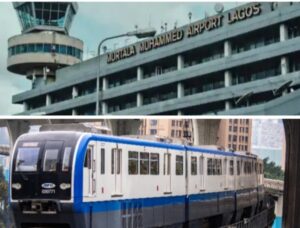
The Federal Government has approved the design of a proposed five-station monorail project that will connect Ikeja Railway Station to the Murtala Muhammed International Airport (MMIA) in Lagos, in a move aimed at improving transportation and passenger access to Nigeria’s busiest aviation gateway.
The Minister of Aviation and Aerospace Development, Festus Keyamo, announced the development on Tuesday, October 20, 2026, following a review meeting involving the Permanent Secretary of the Federal Ministry of Aviation and Aerospace Development, the Managing Director of the Federal Airports Authority of Nigeria (FAAN), and engineering teams from both institutions.
According to Keyamo, the proposed monorail will convey commuters and air travellers from Ikeja Railway Station, where the Lagos Red Line currently terminates, to Terminal 1 of the international airport, which is undergoing reconstruction.
The minister identified the five proposed stations as Ikeja Station, Domestic Airport Station, Beesam Station, Toll Gate Station and Murtala Muhammed International Airport Station.
He described the project as an integral part of the ongoing reconstruction and modernisation of the Lagos airport.
The proposed monorail is expected to provide an alternative to road transportation, allowing passengers to connect more conveniently between the city’s rail network and the airport.
If implemented, the project could help reduce the pressure on road access routes to the airport, particularly during peak travel periods when traffic congestion frequently affects movement around the facility.
FG, Lagos Government Plan Rail Connectivity
The monorail proposal follows earlier plans announced by the Federal Government to extend the existing Lagos rail network from Ikeja to the airport’s domestic and international terminals.
In June 2026, Keyamo disclosed that the Federal Government was working with the Lagos State Government to extend rail services to key airport facilities, including the General Aviation Terminal, the domestic terminal and the international terminal.
The planned connection is expected to integrate airport transportation with the Lagos Red Line, strengthening links between the airport and other parts of the state.
FAAN Managing Director, Olubunmi Onabanjo-Kuku, also disclosed on October 18 that discussions on financing the proposed airport rail project had reached an advanced stage.
Speaking at the World Aviation Festival in Lisbon, Portugal, she said efforts were ongoing to finalise the project’s financing structure.
She explained that the proposed rail connection would serve the airport’s terminals and cargo facilities, improving movement for passengers and other airport users.
Project Forms Part of Airport Modernisation
The proposed monorail comes as the Federal Government continues efforts to modernise the Murtala Muhammed International Airport, which serves as a major gateway for international travel to and from Nigeria.
Terminal 1 is currently undergoing reconstruction, alongside other infrastructure improvements intended to enhance passenger movement, airport operations and the overall travel experience.
The airport’s modernisation programme also includes improvements to facilities connecting the terminals and measures aimed at making passenger movement more convenient.
The integration of rail transportation into the airport’s infrastructure is expected to strengthen connectivity between aviation and public transport, potentially benefiting commuters, travellers and airport workers.
However, the approval of the monorail design does not mean construction has been completed or that passenger services are about to commence.
As of Tuesday, October 20, the minister had not announced the project’s total cost, construction commencement date or expected completion timeline.
The proposed monorail therefore represents another step towards establishing a direct rail connection between Ikeja and the Murtala Muhammed International Airport, subject to the remaining project development and implementation processes.