By Peace Udugba
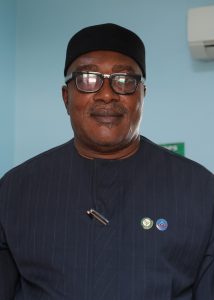
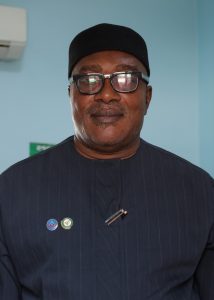
A former Director of the Department of State Services (DSS), Mike Ejiofor, has renewed calls for the establishment of state police, insisting it remains one of the most viable solutions to Nigeria’s worsening security challenges.
Speaking on Monday during an exclusive interview on Frontline, a current affairs programme on Eagle 102.5 FM, Ilese-Ijebu, Ogun State, Ejiofor expressed frustration over the continued delay in adopting the policy despite what he described as broad consensus among key stakeholders.
He argued that Nigeria’s security coordination would be significantly improved if state police were created, noting that the idea has already received support across different levels of government.
“For me, coordination will be more effective if we have state police. I have been a strong advocate of its creation, and I don’t know why the federal government has been dragging its feet on it,” he said.
According to him, the President, the National Assembly, and state governors have all expressed support for the initiative, raising questions about the delay in its implementation.
“The President has embraced the idea, the National Assembly has embraced it, and the governors have also embraced it. Virtually everybody has agreed to it,” he said.
Ejiofor questioned the legislative priorities of political leaders, suggesting that urgent security reforms appear to progress more slowly than less critical matters.
“So what has been delaying it? There are issues that are less important, yet when it comes to taking loans, they are approved within 48 hours or even two hours,” he said. “I think they know what they are doing, especially our politicians.
If state police is established, more than half of our problems will be solved.”
The former DSS boss explained that state police would be more effective because officers would be recruited locally and would better understand the terrain, culture, and people of their communities.
He noted that informal security structures already exist across states in the form of vigilantes and task forces, arguing that formalising them would strengthen national security.
“There is no state now without some form of state policing in the name of task forces or vigilante groups,” he said.
“What is needed is to formalise them, ensure proper recruitment, and provide leadership for effective operations.”
He, however, cautioned that proper safeguards must be put in place to prevent political abuse and ensure professionalism in recruitment and operations.
Ejiofor stressed that the role of state police should be clearly defined, particularly in intelligence gathering and collaboration with federal security agencies, while major crimes such as terrorism and insurgency should remain under federal jurisdiction.
“There must be a limit to their operations. They should not handle major crimes like terrorism, sabotage, or insurgency. Their primary role should be intelligence gathering and collaboration with the federal police,” he said.
He also highlighted trust deficits between federal police and local communities, noting that in some regions, security personnel are viewed with suspicion.
“For instance, in the Southeast, many people see security operatives as outsiders or occupiers,” he said.
Ejiofor further argued that modern security demands greater flexibility, technological capacity, and adequate equipment for rapid response, adding that states should be allowed to develop their own security systems.
“There should be no unnecessary restrictions. States can acquire technology, surveillance systems, and other tools needed for effective security. Once each state takes responsibility for its security, criminal elements will have fewer places to operate,” he said.
He, however, emphasized that recruitment must be transparent and non-partisan to avoid politicising the system.
“The recruitment process must be carefully handled so that politicians are not recruited into the system, thereby worsening the problem,” he warned.
Ejiofor concluded that if properly implemented, state police structures across the country would significantly weaken criminal networks and reduce their ability to operate freely.